Who Is Responsible for Fire Alarm Compliance in Southern California?
It is 2:00 AM on a Tuesday, and the fire alarm in your commercial building is blaring. The fire department arrives, clears the building, and determines it was a false alarm caused by a neglected smoke detector. The next day, the local fire inspector arrives, issues a citation, and demands to see your testing records.
When the inspector asks, "Who is responsible for this system?" — do you know the answer?
For many property managers and commercial building owners in Southern California, fire alarm compliance is a gray area. Between the property owner, the property management company, the tenants, and the fire protection contractor, it is easy to assume that
someone else is handling it.
But when it comes to the California Fire Code and the
National Fire Protection Association (NFPA) standards, assumptions can lead to massive fines, liability exposure, and compromised life safety.
Here is exactly who is responsible for fire alarm compliance in Southern California commercial properties, what the law requires, and how to ensure your building stays legal.
The Ultimate Responsibility: The Property Owner
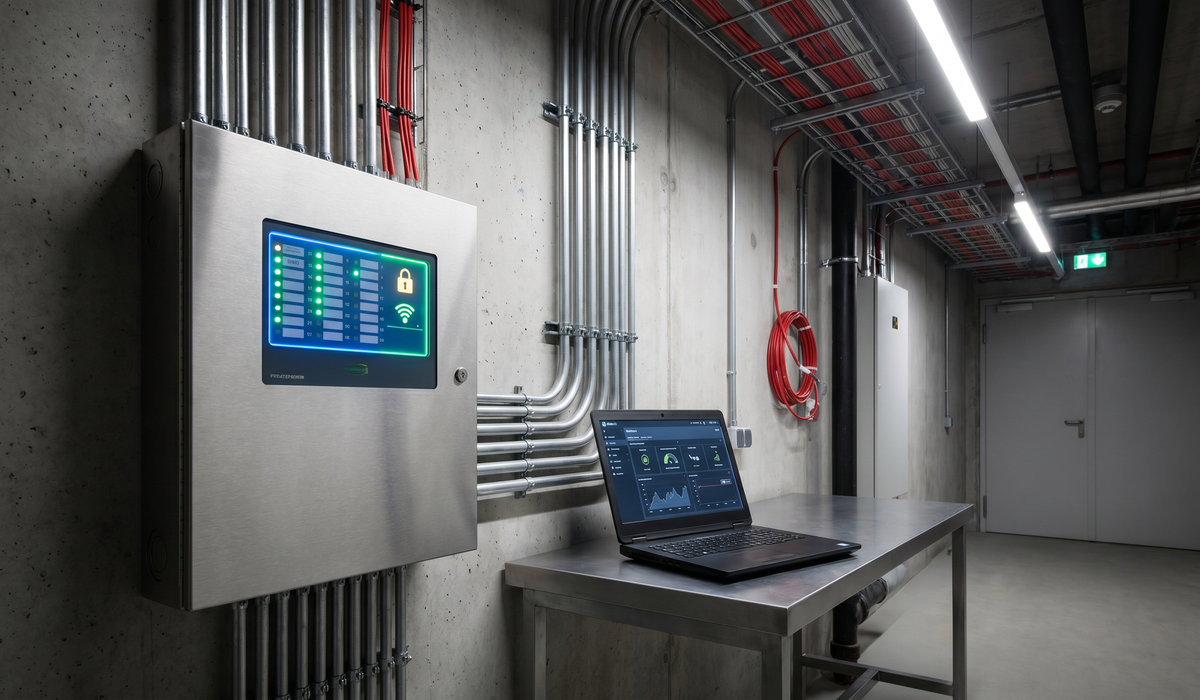
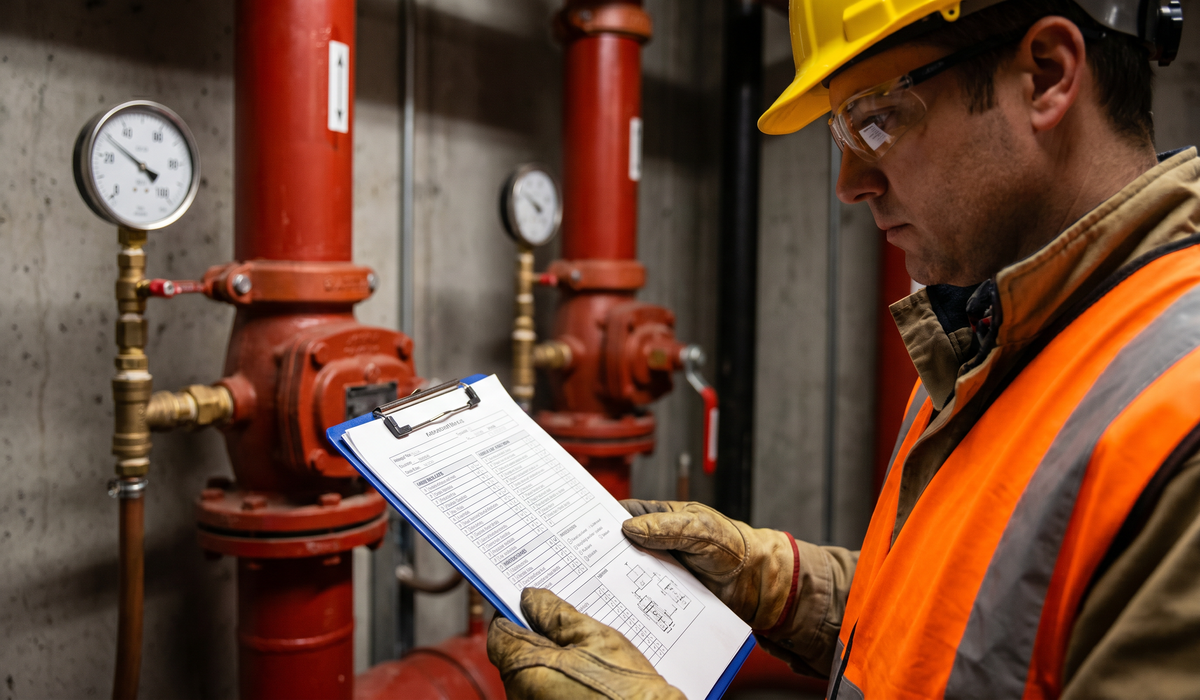
Under the California Fire Code and NFPA 72 (National Fire Alarm and Signaling Code), the ultimate responsibility for the inspection, testing, and maintenance (ITM) of a fire alarm system rests squarely on the property owner [1].
Even if a property owner hires a property management company or leases the building to a single tenant under a triple-net (NNN) lease, the legal liability for life safety systems cannot be fully contracted away. If a fire occurs and the alarm system fails because it was not properly maintained, the Authority Having Jurisdiction (AHJ) — typically the local fire marshal — will look to the property owner first.
The Role of the Property Manager
While the owner holds the ultimate liability, the day-to-day responsibility for ensuring compliance almost always falls to the property manager or facility manager.
Property managers act as the owner's designated representative. It is their job to ensure that:
- Annual fire alarm testing is scheduled and completed on time.
- The system is monitored 24/7 by a UL-listed central station.
- Any deficiencies found during testing are repaired promptly.
- All testing and maintenance records are kept on-site and available for the AHJ to review.
The Role of the Authority Having Jurisdiction (AHJ)
You will hear the term "AHJ" frequently in fire protection. The Authority Having Jurisdiction is the organization, office, or individual responsible for enforcing the requirements of a code or standard [2].
In Southern California, the AHJ is usually the local fire department or fire marshal (e.g., the Los Angeles Fire Department, Orange County Fire Authority, or a specific city's fire prevention bureau).
What the AHJ does:
- Reviews and approves plans for new fire alarm installations or upgrades.
- Conducts periodic fire and life safety inspections of commercial properties.
- Issues citations or notices of violation if a building's fire alarm system is out of compliance.
- Determines the specific local amendments to the California Fire Code that apply to your building.
What the AHJ does NOT do:
- The AHJ does not test your fire alarm system for you.
- The AHJ does not repair your system.
- The AHJ does not remind you when your annual testing is due.
It is the property manager's responsibility to ensure the system is compliant
before the AHJ walks through the door.
The Role of the Licensed Fire Protection Contractor
Because fire alarm systems are complex life safety networks, the California Fire Code requires that inspection, testing, and maintenance be performed by qualified, licensed personnel.
This is where a licensed fire protection contractor comes in. Property managers must partner with a qualified contractor to perform the actual ITM work.
A qualified contractor is responsible for:
- Performing the physical testing of the fire alarm control panel, smoke detectors, pull stations, and notification appliances according to NFPA 72 standards.
- Providing a detailed, code-compliant report of the testing results.
- Identifying any deficiencies or required repairs.
- Providing 24/7 UL-listed alarm monitoring services.
However, hiring a contractor does not absolve the property manager of responsibility. If the contractor identifies a broken smoke detector and the property manager fails to approve the repair, the property manager (and owner) remains liable for the non-compliant system.
Special Rules for Multifunction and Mixed-Use Properties
Southern California is seeing a massive boom in multifunction and mixed-use properties — buildings that combine residential apartments, ground-floor retail, and office space.
These properties present unique compliance challenges. According to California law, including Health and Safety Code Section 13146.2, properties with three or more attached residential units (multifamily) are subject to strict annual fire inspection requirements [3].
In a mixed-use building, the fire alarm system is often integrated across the entire property. A fire in the ground-floor restaurant must trigger the alarms in the residential apartments above.
Who is responsible here? In mixed-use properties, the
commercial property manager or Homeowners Association (HOA) is typically responsible for the central fire alarm control panel and the common area devices. However, individual commercial tenants (like the restaurant owner) may be responsible for the specific devices within their leased space, depending on the lease agreement.
Regardless of the lease terms, the property manager must ensure that the
entire integrated system is tested annually as a single cohesive unit.
Compliance Simplification: Making It Easier
Managing fire alarm compliance can feel overwhelming, but it doesn't have to be. Proactive compliance actually simplifies property management.
When you establish a predictable, scheduled ITM program with a reliable fire protection partner, you eliminate the stress of surprise AHJ inspections, costly emergency repairs, and disruptive false alarms. A well-maintained system runs quietly in the background, allowing you to focus on managing your property rather than putting out literal and figurative fires.
How Fire Testing Solutions Can Help
At Fire Testing Solutions, we partner with Southern California property managers to take the guesswork out of fire alarm compliance. We provide the licensed expertise required to keep your building legal and your tenants safe.
Our services include:
- Fire Alarm Testing:
Comprehensive annual ITM testing per NFPA 72 and California Fire Code requirements.
- Alarm Monitoring: 24/7 UL-listed central station monitoring to ensure rapid emergency response.
- Repair Services: Prompt, professional repair of any deficiencies found during testing to restore your system to full compliance.
- Installation: Expert installation of new fire alarm systems or code-required upgrades.
We handle the technical execution and the documentation, so when the AHJ asks who is responsible for your system, you can confidently hand them a clean, compliant testing report.
Frequently Asked Questions
Can my in-house maintenance team test the fire alarm system?
No. The California Fire Code and NFPA 72 require that fire alarm systems be tested and maintained by qualified, licensed personnel. General maintenance staff do not have the specific licensing or training required to certify a life safety system.
Who is responsible if a tenant damages a fire alarm device?
While the tenant may be financially responsible for the damage based on their lease agreement, the property owner and manager are ultimately responsible to the AHJ for ensuring the device is repaired and the system is restored to full working order immediately.
How long do I need to keep fire alarm testing records?
NFPA 72 requires that testing and maintenance records be retained until the next test and for one year thereafter. However, it is a best practice for property managers to maintain these records indefinitely to demonstrate a history of compliance.
What happens if my building fails an AHJ inspection?
If the AHJ finds your fire alarm system out of compliance, they will issue a notice of violation with a specific deadline to correct the issue. Failure to meet this deadline can result in daily fines, a "fire watch" mandate, or even the revocation of the building's certificate of occupancy.
Secure Your Building's Compliance Today
Don't wait for a false alarm or a surprise inspection to find out your fire alarm system is out of compliance. Partner with the experts at Fire Testing Solutions to ensure your Southern California commercial property is fully protected and legally compliant.
Book a call:
https://www.firetestingsolutions.com/contact
Phone Number: 866-757-8378
Email:
service@firetestingsolutions.com
Address:
700 W. First St, Suite 10
Tustin, CA 92780
References
[1] NFPA 72, National Fire Alarm and Signaling Code, Chapter 14 (Inspection, Testing, and Maintenance).
[2] NFPA Glossary of Terms, Definition of Authority Having Jurisdiction (AHJ).
[3] California Health and Safety Code, Section 13146.2.