Safety Challenges and Fire Protection Systems in Modern Warehouses: A Complete Guide for Property Managers
In March 2022, a massive fire tore through a 1.2 million-square-foot Walmart fulfillment center in Plainfield, Indiana. Despite being a relatively new building equipped with state-of-the-art fire suppression systems, the facility and its contents were a total loss [1]. This event was a stark wake-up call for the logistics industry: the nature of warehousing has changed, and so have the fire risks.
As a property manager or warehouse owner, you are on the front lines of a rapidly evolving landscape. The push for greater efficiency has led to taller racks, denser storage, and unprecedented levels of automation. While these advancements drive business, they also create a perfect storm for catastrophic fire events that can overwhelm traditional safety measures. The statistics are sobering: U.S. fire departments respond to an average of 1,544 warehouse fires each year, resulting in over $314 million in direct property damage annually [2].
Navigating this new reality requires more than just having a sprinkler system; it demands a deep understanding of modern hazards and the specialized systems designed to combat them. This guide will walk you through the critical safety challenges of today’s warehouses, demystify the complex web of fire codes, and provide a clear path toward comprehensive compliance and peace of mind.
The New Danger Zone: Why Modern Warehouses Are a Different Beast
Today’s warehouses bear little resemblance to the storage facilities of the past. The relentless demands of e-commerce and just-in-time delivery have fundamentally altered their design and operation, introducing a new class of fire risks.
1. Unprecedented Storage Density: To maximize every square foot, facilities are building up, with storage racks soaring to 40 feet or higher. This “too-tall, too-dense” approach means a fire has access to a massive, uninterrupted fuel load. Furthermore, the common practice of breaking down pallets into individual items for order picking often leads to blocked flue spaces—the critical vertical channels that allow heat to rise to ceiling sprinklers and, just as importantly, allow water to penetrate deep into the racks where a fire may be burning.
2. The Rise of Automation (ASRS): Automated Storage and Retrieval Systems (ASRS) are the heart of the modern fulfillment center. However, these robotic systems create extremely narrow or even non-existent aisles. While efficient for robots, this design makes manual firefighting nearly impossible. Firefighters wearing bulky protective gear and SCBA tanks cannot navigate these tight spaces, effectively preventing them from reaching the seat of a fire.
3. The Proliferation of Lithium-Ion Batteries: Perhaps the most significant new hazard is the widespread use of lithium-ion batteries. They power everything from the ASRS robots navigating the warehouse floor to the countless consumer electronics stored on the shelves. When damaged or defective, these batteries can enter a state of “thermal runaway,” an explosive, high-temperature chemical reaction that is notoriously difficult to extinguish with water. The global market for these batteries is projected to hit $138 billion by 2026, embedding this potent ignition source into nearly every corner of the logistics chain [3].
Your Fire Protection Playbook: Specialized Systems Explained
Given these complex hazards, a one-size-fits-all approach to fire protection is no longer viable. A modern warehouse requires a layered defense of specialized systems, each designed to address a specific threat. Understanding these systems is the first step toward ensuring your facility is adequately protected.
| System Type | Primary Function & Application | Key Considerations |
|---|---|---|
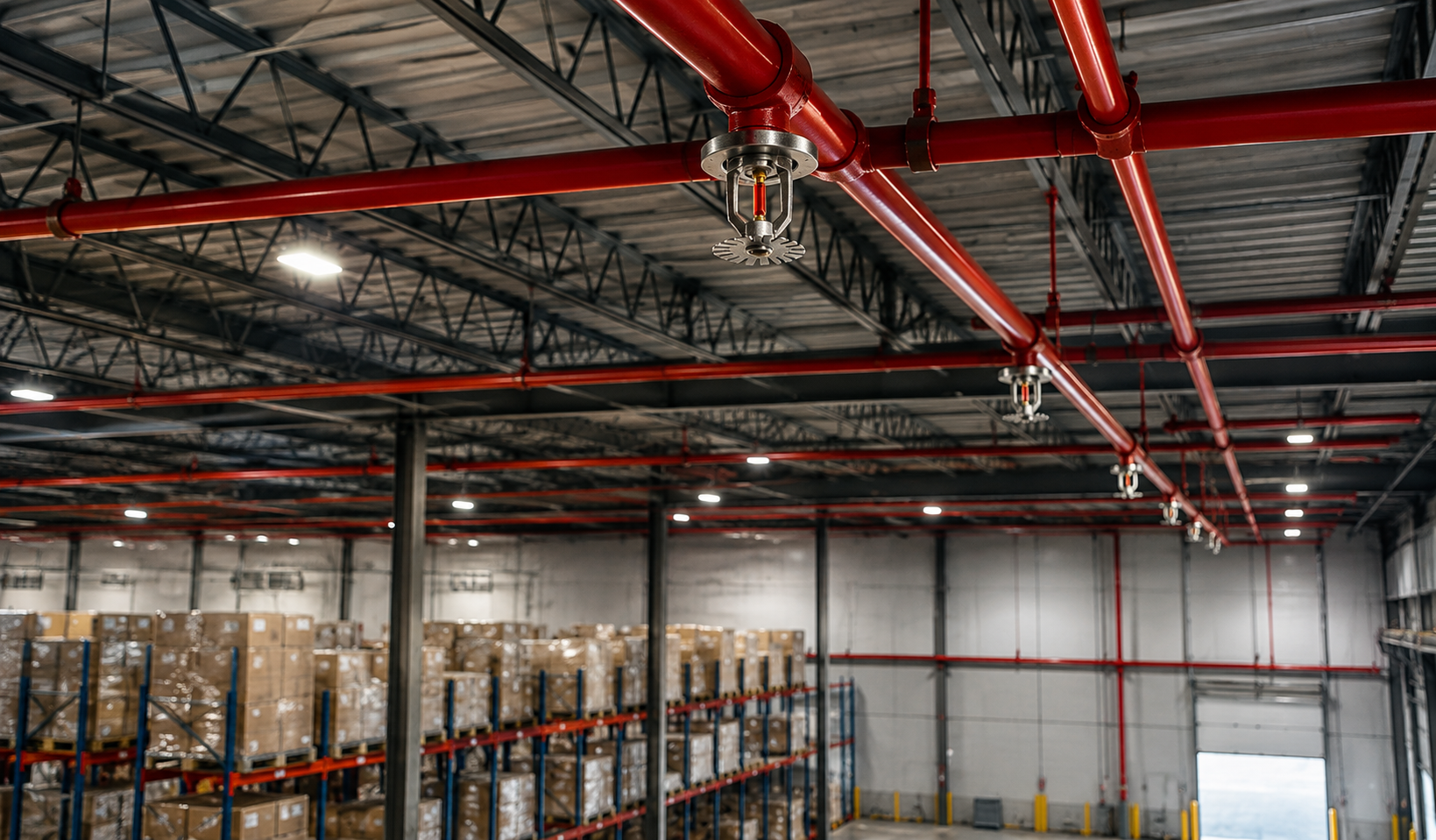
| Early Suppression Fast Response (ESFR) Sprinklers | A high-volume, high-velocity ceiling sprinkler system designed to suppress a fire in its early stages, not just control it. Ideal for high-piled storage. | Extremely sensitive to obstructions. A minimum of 36 inches of clearance between the sprinkler deflector and the top of storage is mandatory. |
| In-Rack Sprinklers | Sprinklers installed directly within storage racks at various vertical tiers. Essential for protecting high-hazard commodities and mitigating flue space blockages. | Required by NFPA 13 for many modern storage configurations, especially for high-hazard plastics or when rack depth exceeds certain limits. |
| Foam-Water Systems | Used for areas storing flammable and combustible liquids. The foam creates a blanket over the fuel source, suppressing flammable vapors and preventing re-ignition. | Governed by NFPA 16. Essential for facilities handling liquids like hand sanitizer, aerosols, or certain chemicals. |
| Clean Agent & Gaseous Systems | Protects sensitive electronic equipment, such as server rooms, data centers, and ASRS control centers, by displacing oxygen or absorbing heat without leaving a residue. | The most effective way to protect mission-critical electronics without causing water damage. Governed by NFPA 2001. |
| Flame Detectors | Senses the ultraviolet (UV) or infrared (IR) energy from an open flame, triggering an alarm much faster than traditional smoke detectors in high-ceiling environments. | Can reduce detection time by up to 60% in large, open warehouses, providing a critical head start for suppression systems. |
| Dry Pipe & Pre-Action Systems | Used in environments where freezing is a concern, such as cold storage warehouses. The pipes are filled with pressurized air or nitrogen, and water is only released upon activation. | There is an inherent delay in water delivery compared to wet pipe systems, which must be factored into the overall safety design. |
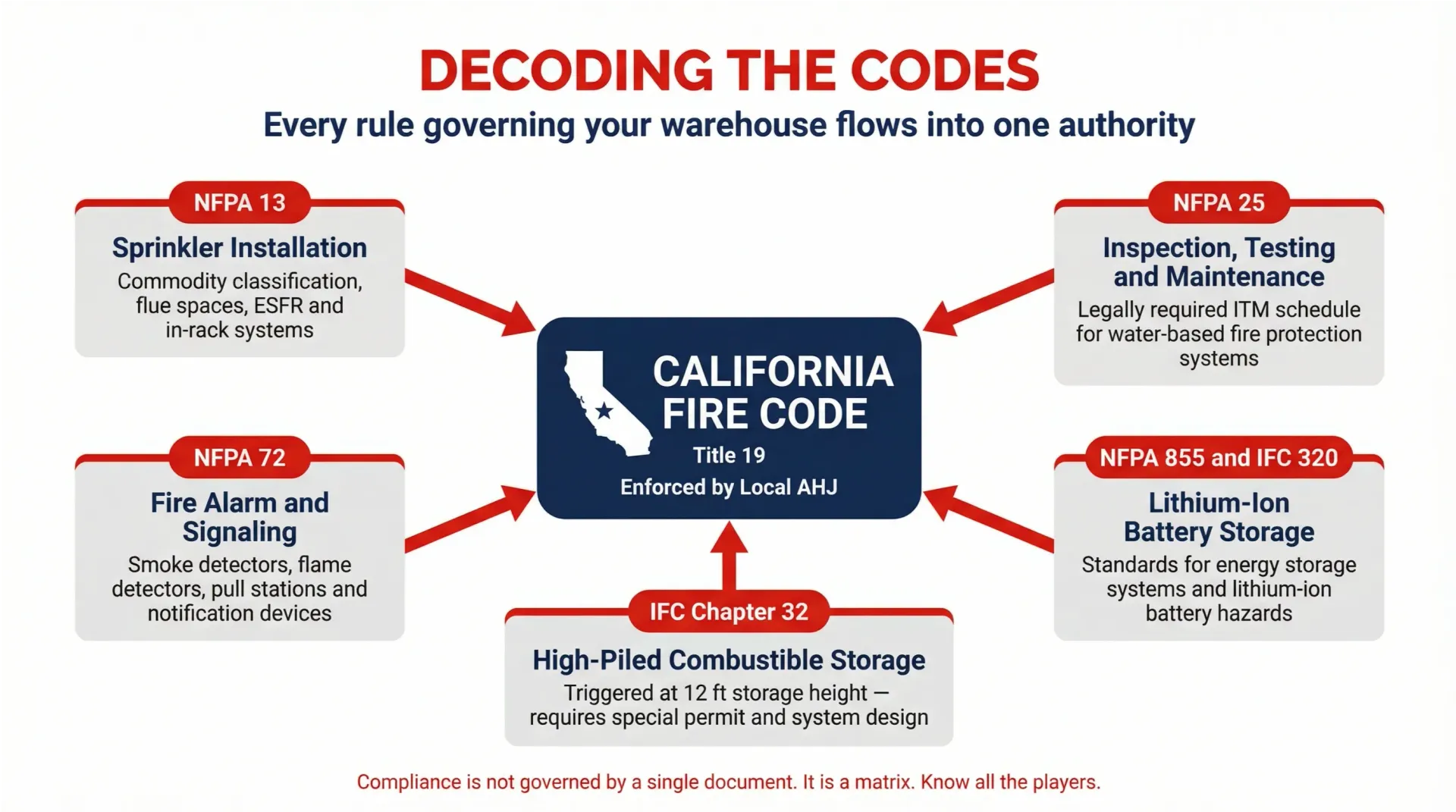
Decoding the Codes: The Rules That Govern Your Warehouse
Compliance is not governed by a single document but by a matrix of interconnected national and local codes. While this can seem daunting, understanding the key players is crucial for any property manager.
- NFPA 13: Standard for the Installation of Sprinkler Systems:
This is the foundational document for sprinkler system design. It dictates everything from commodity classification and flue space requirements to the specific design criteria for ESFR and in-rack systems.
- NFPA 25: Standard for the Inspection, Testing, and Maintenance (ITM) of Water-Based Fire Protection Systems:
This is the cornerstone of ongoing compliance. It mandates the legally required schedule for inspecting, testing, and maintaining every component of your sprinkler and fire pump systems. Proper ITM could prevent up to 79% of all sprinkler system failures [2].
- NFPA 72: National Fire Alarm and Signaling Code®:
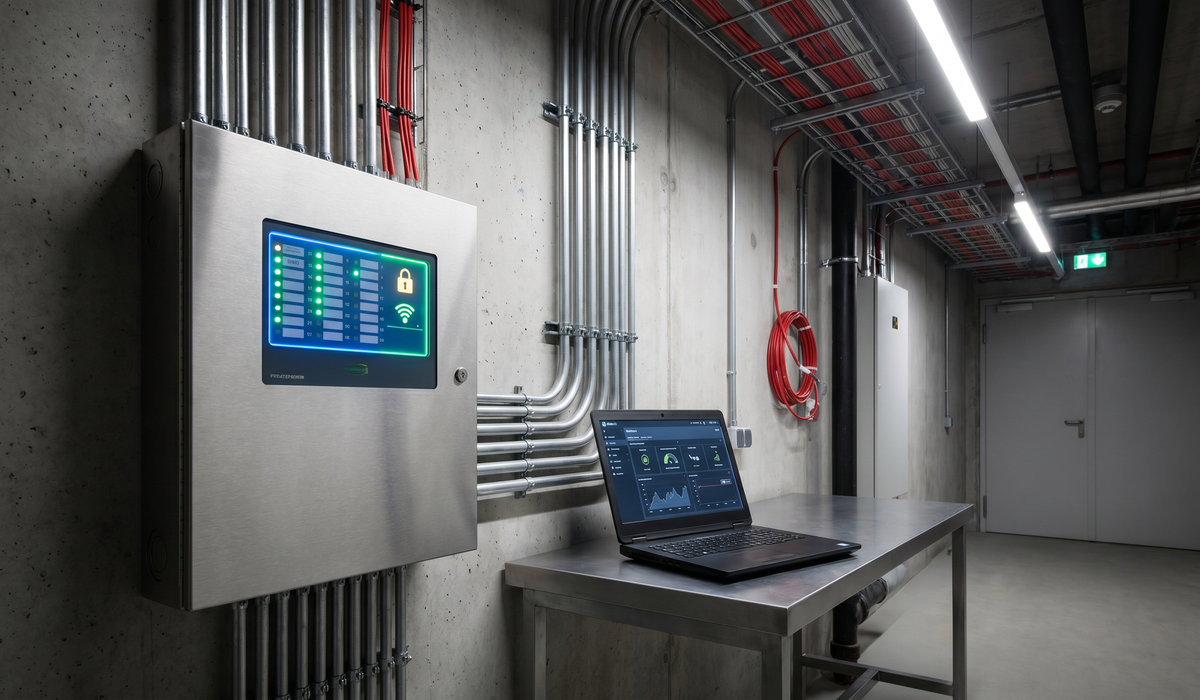
This code governs the installation, performance, and ITM requirements for your fire alarm system, including smoke detectors, flame detectors, pull stations, and notification devices.
- NFPA 855 & International Fire Code (IFC) Section 320:
These are the critical new standards that address the significant hazards of storing lithium-ion batteries and energy storage systems (ESS).
- IFC Chapter 32: High-Piled Combustible Storage:
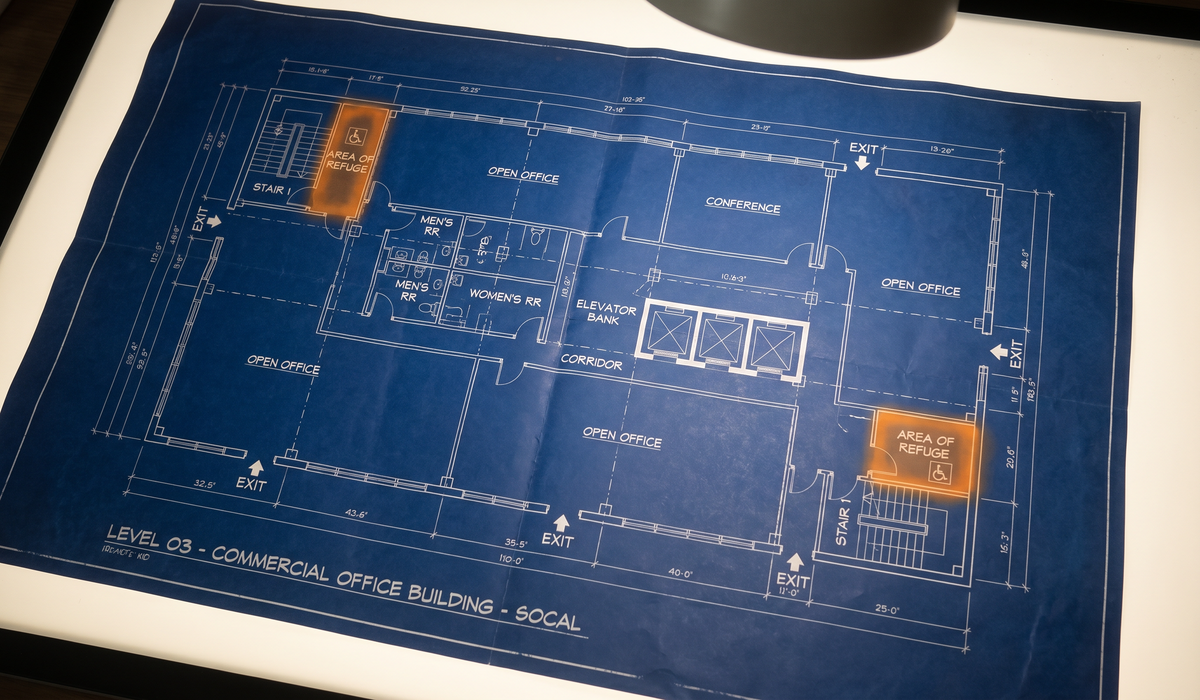
This chapter is triggered when you store combustible goods over a certain height (typically 12 feet in California). It requires you to obtain a special permit from your local fire department and adhere to strict rules regarding aisle width, storage layout, and fire protection system design.
In California, these NFPA standards are adopted into the California Fire Code (CFC) and Title 19 of the California Code of Regulations, making them legally enforceable. Local fire departments, acting as the Authority Having Jurisdiction (AHJ), are responsible for enforcing these codes through regular inspections.
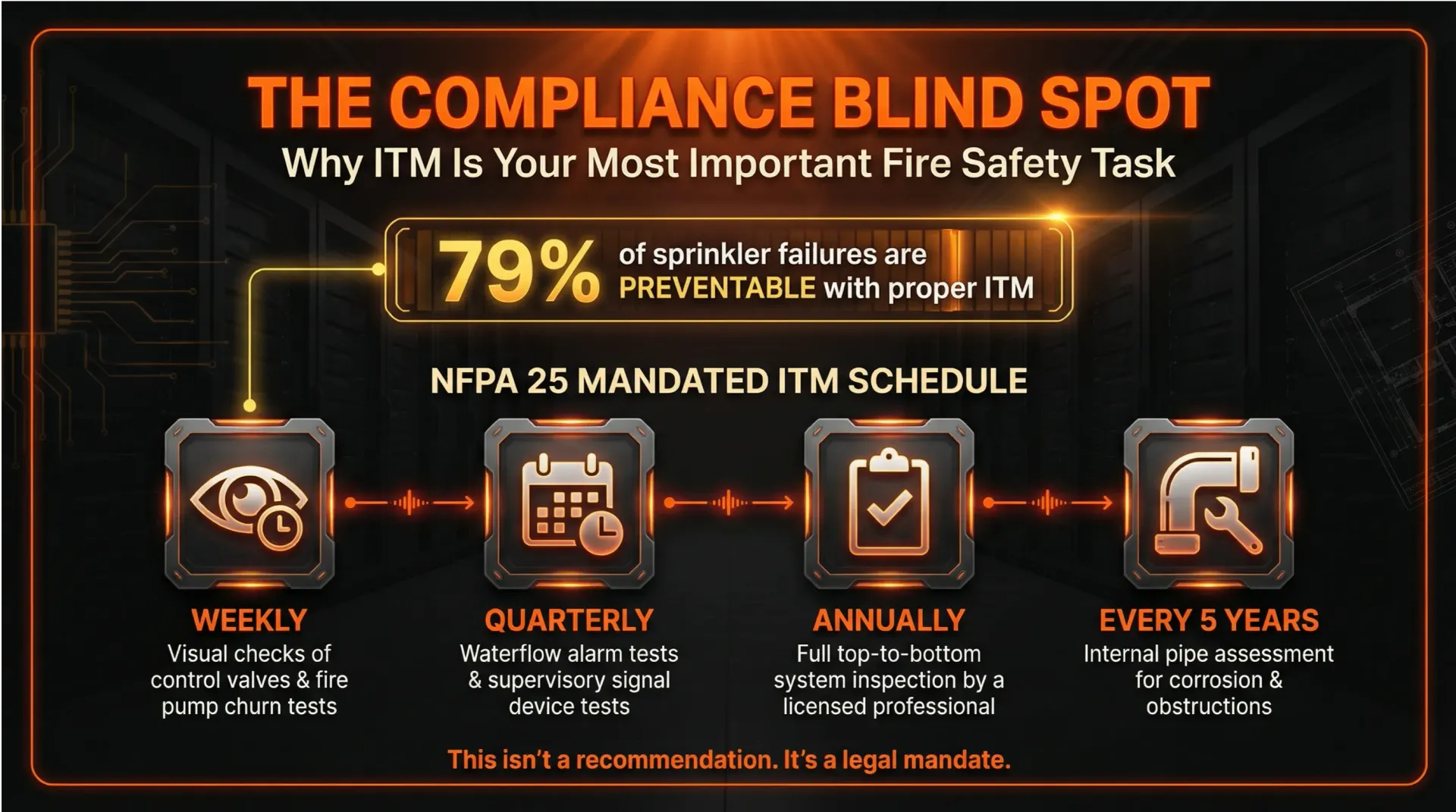
The Compliance Blind Spot: Why ITM is Your Most Important Task
Installing a state-of-the-art fire protection system is only half the battle. Without a rigorous Inspection, Testing, and Maintenance (ITM) program, even the most advanced system can fail when you need it most. This is the single biggest compliance blind spot for many warehouse operators.
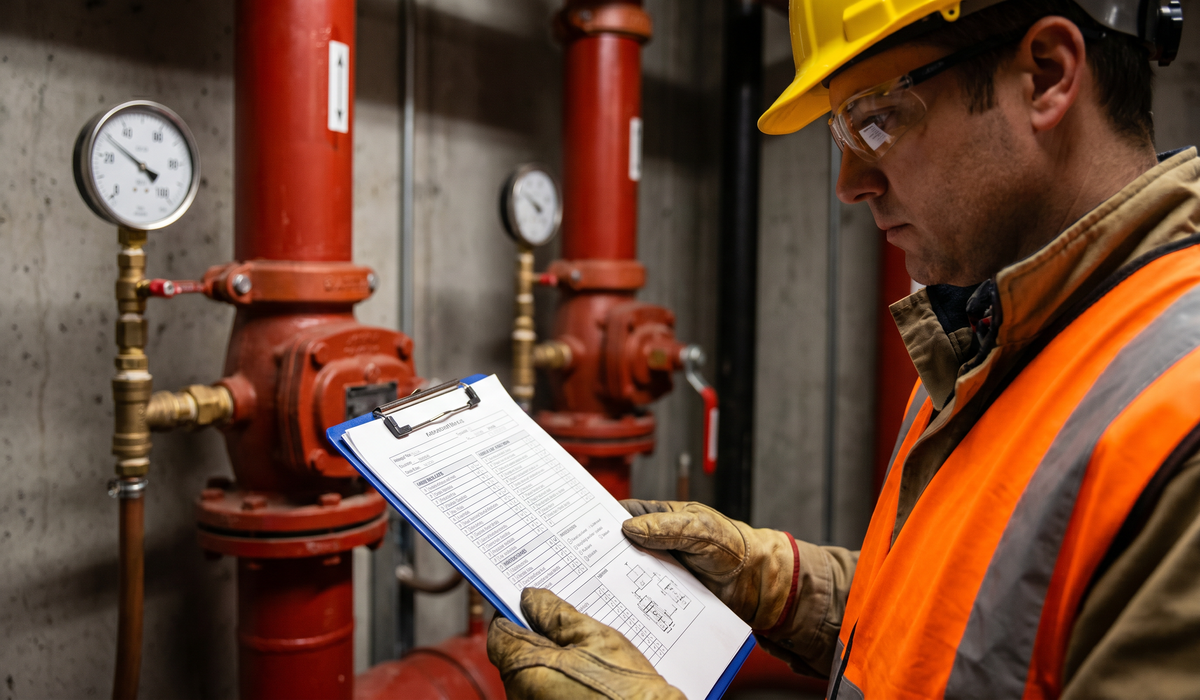
NFPA 25 provides a detailed schedule of legally required activities. This isn’t a set of recommendations; it’s a mandate. A typical ITM program includes:
- Weekly: Visual checks of control valves and fire pump churn tests.
- Quarterly: Waterflow alarm tests and supervisory signal device tests.
- Annually: A full, top-to-bottom system inspection and functional test performed by a licensed professional.
- Every 5 Years: An internal pipe assessment to check for corrosion and obstructions that could block water flow.
Failing to maintain proper ITM records is one of the fastest ways to receive a violation from a fire marshal. More importantly, it puts your entire facility at risk. Partnering with a qualified fire protection company to manage your ITM schedule is the most effective way to ensure your systems are always ready and your documentation is always compliant.
How Fire Testing Solutions Simplifies Your Compliance
We understand that as a property manager, your primary focus is running an efficient and profitable operation. You don’t have time to become an expert in the nuances of NFPA 13 or the latest updates to the California Fire Code. That’s our job.
Fire Testing Solutions acts as your dedicated compliance partner, taking the complexity of fire protection off your plate. We provide a single point of contact for all your ITM needs, ensuring that every component of your safety system is tested, certified, and ready for any inspection.
Our services are specifically designed to address the challenges of modern warehouses:
- Comprehensive ITM Programs:
We manage the entire NFPA 25 and NFPA 72 schedule for your sprinklers, fire pumps, and fire alarms, providing you with the flawless documentation you need to prove compliance.
- Specialized System Expertise: Our technicians are trained to inspect and test the complex systems that protect modern facilities, including ESFR, in-rack, and pre-action systems.
- Local Code Knowledge: We have deep expertise in the specific requirements of fire departments across Southern California, ensuring your facility meets local as well as national standards.
By entrusting your fire safety to us, you free yourself to focus on your business, confident that your property, assets, and people are protected.
Frequently Asked Questions (FAQs)
1. What is the first step if I want to increase my storage height? Before you change your racking or storage height, you must consult with a fire protection engineer and your local fire department. Increasing storage height will likely trigger high-piled storage requirements under IFC Chapter 32 and may require significant upgrades to your sprinkler system. Do not change your storage configuration without getting a permit first.
2. My warehouse has a mix of products. How do I know what my commodity classification is? Your facility is protected based on the
most hazardous commodity you store. Even a small amount of Group A plastics can require your entire storage area to be protected to that higher standard. A fire protection professional can help you perform a commodity hazard analysis to ensure your protection scheme is adequate.
3. How much disruption does annual fire system testing cause? A professional fire protection company like Fire Testing Solutions will work with you to schedule testing at times that minimize disruption to your operations. While some systems (like the fire alarm) will be briefly activated, the process is planned and coordinated to ensure a smooth experience.
4. What happens if a fire marshal finds a violation? If a violation is found, you will typically be given a set period to correct the issue. Failure to do so can result in significant fines, and in severe cases, the fire department may force a partial or full shutdown of your facility until the violation is resolved. This is why proactive compliance is so critical.
Take the First Step Toward Total Compliance
The risks are real, but they are manageable. Proactive compliance is the most effective strategy for protecting your warehouse from the growing threat of fire. Don’t wait for an emergency or a failed inspection to take action.
If you’re ready to partner with an expert who can handle the complexities for you, contact Fire Testing Solutions. Let us provide you with a comprehensive compliance assessment and the peace of mind that comes with knowing you’re protected.
- Book a Call:
https://www.firetestingsolutions.com/contact
- Phone Number: 866-757-8378
- Email: service@firetestingsolutions.com
- Address: 700 W. First St, Suite 10, Tustin, CA 92780