How to Communicate Fire Safety Testing to Tenants (Without Causing Alarm)
Let’s be honest: no tenant likes hearing a fire alarm. Even during a planned test, the sudden, loud noise can cause a wave of anxiety, disrupt a critical business meeting, or send a remote worker’s dog into a barking frenzy. For a property manager, that single moment can undo months of goodwill.
But what if we told you that the way you communicate these tests is just as important as the tests themselves? What if effective communication could turn a necessary disruption into a powerful tool for tenant retention?
In our guide on
The $18,000 Employee Turnover Cost: How Fire Safety Affects Tenant Retention, we established that a visible commitment to safety is critical for keeping your tenants’ best employees. Proactive communication about fire safety testing is a cornerstone of that commitment. It’s not just about sending an email; it’s about building trust and demonstrating that you value your tenants' safety and peace of mind.
This guide provides a complete playbook for communicating fire safety testing in your California commercial or mixed-use property—without causing unnecessary alarm and while actively boosting tenant satisfaction.
The Psychology of the Fire Alarm: Why Clear Communication is Non-Negotiable
Think about the last time you heard an unexpected fire alarm. Your heart likely started racing. Your brain switched into high alert. Now, imagine that happening to your tenants and their employees, who are trying to run a business. Even if they know it’s a test, the disruption is real. Without proper communication, that disruption can quickly turn into frustration and a perception that the building is poorly managed.
This isn't just speculation. Research shows a direct link between perceived safety and job satisfaction. When employees feel their environment is unsafe or chaotic, their turnover intention increases [1]. Consistent, professional communication about safety procedures like fire alarm testing sends a powerful subconscious message:
"This building is managed by professionals who care about our well-being."
By framing fire safety testing with clear and timely information, you transform it from a startling annoyance into a visible demonstration of your commitment to their safety. This simple shift can have a profound impact on tenant retention, which, as we know, is directly linked to your property's value.
Ready to build a communication strategy that enhances tenant trust? Fire Testing Solutions works with property managers across Southern California to create seamless testing and communication plans.
Book a call to discuss your property.
California Law: What You’re Required to Do
In California, communicating with tenants about fire safety isn’t just good practice—it’s often implicitly required to facilitate legally mandated testing. The California Fire Code (CFC) and NFPA 72 (National Fire Alarm and Signaling Code) require regular inspection and testing of all fire protection systems [2].
For multi-tenant commercial and mixed-use properties, these requirements are particularly stringent. Here’s a simplified overview of what needs to be tested and when:
| System Component | California Testing Frequency | What It Means for Tenants |
|---|---|---|
| Full Fire Alarm System | Annually | The most disruptive test, involving audible alarms and strobes. Clear, advance communication is critical. |
| Fire Extinguishers | Monthly (Visual) | Low disruption, but visible inspection tags show consistent oversight. |
| Sprinkler Systems (Water Flow) | Quarterly | May involve brief water flow, requiring notice to prevent false alarms or concern. |
| Emergency Lighting | Monthly & Annually | Tests ensure safe egress, a key factor in employee peace of mind. |
While the codes focus on the testing, as a property manager, you are responsible for providing access and ensuring the tests can be completed without endangering occupants. This is where communication becomes a legal and practical necessity. Failure to facilitate these tests due to poor tenant coordination can lead to compliance violations.
The Fire Safety Communication Playbook: A Step-by-Step Guide
Effective communication is about being proactive, not reactive. Follow this playbook to create a system that builds trust and minimizes disruption.
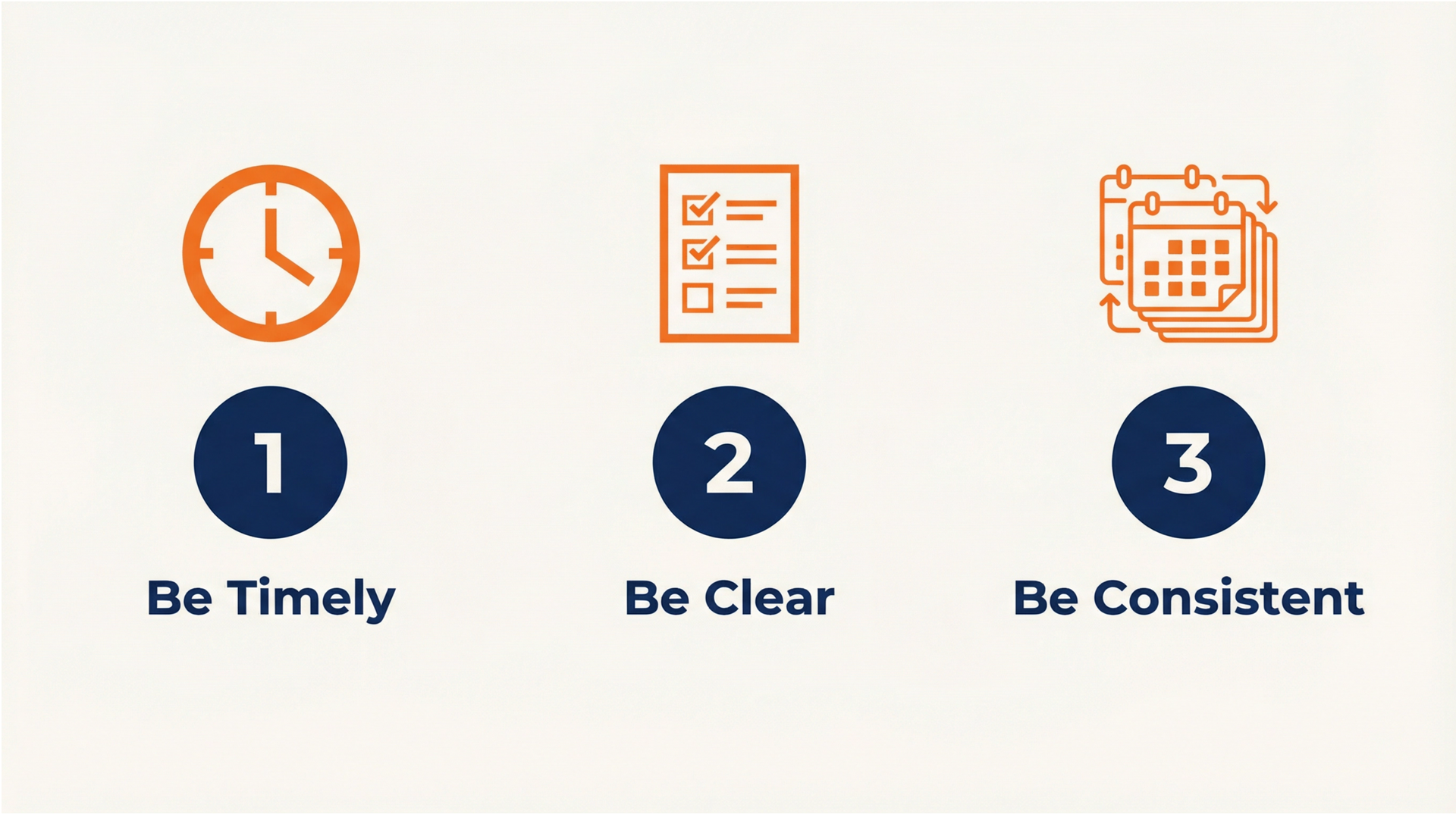
The 3 Golden Rules of Fire Safety Communication
- Be Timely: Provide notice at least 48-72 hours in advance for any disruptive testing. This gives tenants ample time to inform their employees and adjust their schedules.
- Be Clear: Your notice should answer the five Ws: What (is being tested), When (date and specific time window), Why (for safety and compliance), Who (which vendor is performing the test), and What to Expect (e.g., "audible alarms will sound for approximately 30 minutes").
- Be Consistent: Use a standardized template and delivery method for all safety notices. This creates a predictable pattern that tenants learn to recognize and trust.
The Multi-Channel Notification Strategy
Relying on a single channel is a recipe for missed messages. Use a multi-channel approach to ensure your notifications reach everyone.
| Communication Channel | Best For | Example Use Case |
|---|---|---|
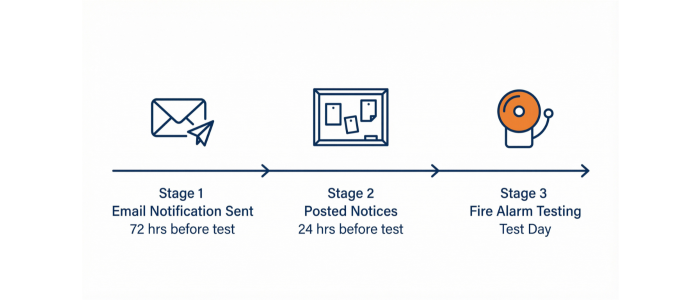
| Email Blast | Primary Notification | Send the initial 48-72 hour notice with full details and templates. |
| Posted Notices | High-Visibility Reinforcement | Post flyers in elevators, lobbies, and mailrooms 24 hours before the test. |
| Tenant Portal | Digital Record-Keeping | Post a permanent announcement on your building’s tenant portal. |
| SMS/Text Message | Day-Of Reminder (Optional) | Send a brief reminder 1-2 hours before the test begins. |
The FTS Advantage: Partnering for Seamless Communication
Managing tenant communication on top of your daily responsibilities is a significant challenge. This is where a professional fire safety partner becomes a powerful extension of your own team. At Fire Testing Solutions, we believe that our job isn’t just to test your systems—it’s to make the entire compliance process, including communication, seamless and stress-free for you.
Instead of leaving you to handle the notices, we integrate communication support directly into our services. Here’s how we ease the burden and help you build tenant trust:
- Predictable Scheduling & Coordination: We don’t just show up. We work with you to establish a clear, consistent annual schedule for all required testing. This allows you to plan your tenant communications months in advance, eliminating surprises and last-minute scrambles. We coordinate with you to find the least disruptive times, ensuring your tenants’ operations are respected.
- Providing Pre-Drafted Communication Templates:
You don’t need to write notices from scratch. We provide you with professionally written, clear, and concise templates for all types of testing—from annual fire alarm tests to monthly extinguisher checks. These templates are designed to be reassuring and informative, answering tenants’ questions before they even ask.
- Clear Documentation for Tenant Transparency:
After every test, we provide you with comprehensive documentation and certifications. These reports aren’t just for your compliance files; they are powerful tools for tenant transparency. You can share these documents with tenants to prove that systems are functioning correctly, reinforcing the value of your building’s safety program.
- A Professional & Courteous On-Site Presence:
The way a vendor behaves on your property reflects on you. Our certified technicians are uniformed, professional, and trained to interact courteously with tenants. They understand they are in a live business environment and work efficiently to minimize their footprint, reducing anxiety and reinforcing a sense of professional oversight on testing day.
By partnering with Fire Testing Solutions, you offload the logistical burden and gain a trusted partner dedicated to maintaining a safe and well-managed property.
Tired of managing testing schedules alone? Let us handle the details. Call us at
866-757-8378 or email
service@firetestingsolutions.com to learn about our full-service testing programs.
Conclusion: Turning a Chore into a Competitive Advantage
Communicating fire safety testing is more than just a box to check. It is a critical touchpoint that directly influences how tenants and their employees perceive your building. A well-executed communication strategy transforms a potentially negative experience into a positive reinforcement of your professionalism and commitment to safety.
By being timely, clear, and consistent, you build the psychological safety that keeps tenants happy and their employees loyal. In a competitive market, this level of professional management is no longer a bonus—it’s a necessity. It’s how you protect your tenants from the high cost of employee turnover and, in turn, protect your own investment.
Ready to implement a fire safety communication plan that enhances tenant retention?
Contact the experts at Fire Testing Solutions today for a free consultation. We’ll help you design a testing and communication strategy that keeps your building safe, compliant, and fully leased.
- Book a Call:
https://www.firetestingsolutions.com/contact
- Phone: 866-757-8378
- Email: service@firetestingsolutions.com
- Visit Us: 700 W. First St, Suite 10, Tustin, CA 92780
References
[1] Amponsah-Tawiah, K., et al. (2016). Occupational Health and Safety Management and Turnover Intention in the Ghanaian Mining Sector. Safety and Health at Work, 7(1), 12–17.
[2] National Fire Protection Association. (2022).
NFPA 72: National Fire Alarm and Signaling Code.