Why Modern California Apartment Buildings Are Safer Than Ever
As a Southern California property manager, you’ve seen the headlines. A fire in a local apartment complex, families displaced, and the lingering question every manager silently asks themselves: “Could that happen in my building?” It’s a heavy weight to carry. You do everything by the book, but the fear that your property might not be as safe as it appears is a constant, low-level hum of anxiety.
But what if we told you there’s good news? Overwhelmingly good news, in fact. Thanks to decades of learning and innovation, modern apartment buildings are safer from fire than at any point in history. This isn’t an accident or a matter of luck; it’s the direct result of a layered, interconnected system of fire protection technologies and codes that work together to save lives.
This guide will break down exactly what makes modern California apartment buildings so much safer, explain the critical systems that protect your residents, and clarify why ongoing professional testing is the only way to ensure this safety net holds strong when it’s needed most.
The Proof Is in the Data: A New Era of Fire Safety
It’s not just a feeling; it’s a fact backed by extensive research. A recent report from The Pew Charitable Trusts analyzed decades of fire data and came to a powerful conclusion: multifamily buildings constructed since the year 2000 have significantly lower fire death rates than their older counterparts.
In response to this report, the National Fire Protection Association (NFPA) confirmed that this dramatic increase in safety is no coincidence. It’s the direct result of a robust, consensus-based codes and standards process that has led to the widespread adoption of life-saving technologies [2].
So, what are these technologies? It’s not just one thing, but a combination of four key pillars working in concert to detect, contain, and suppress fires while giving residents time to escape safely.
Is Your Building Up to Modern Standards? Even if your building is older, many of these safety systems can be retrofitted. If you’re unsure whether your property meets current California fire safety standards, our team can help.
Book a no-obligation consultation today.
The 4 Pillars of Modern Multifamily Fire Safety
Think of your building’s fire protection as a team of specialists. Each has a different job, but they all communicate and work together to achieve a single goal: protecting lives. Using the Feynman Technique of explaining complex ideas in simple terms, here’s how each pillar works
.
Pillar 1: Automatic Fire Sprinklers (The 24/7 Firefighter)
This is arguably the single most effective life-saving technology in a building. Forget what you’ve seen in movies where one sprinkler sets off all the others. That’s a myth.
- How They Really Work:
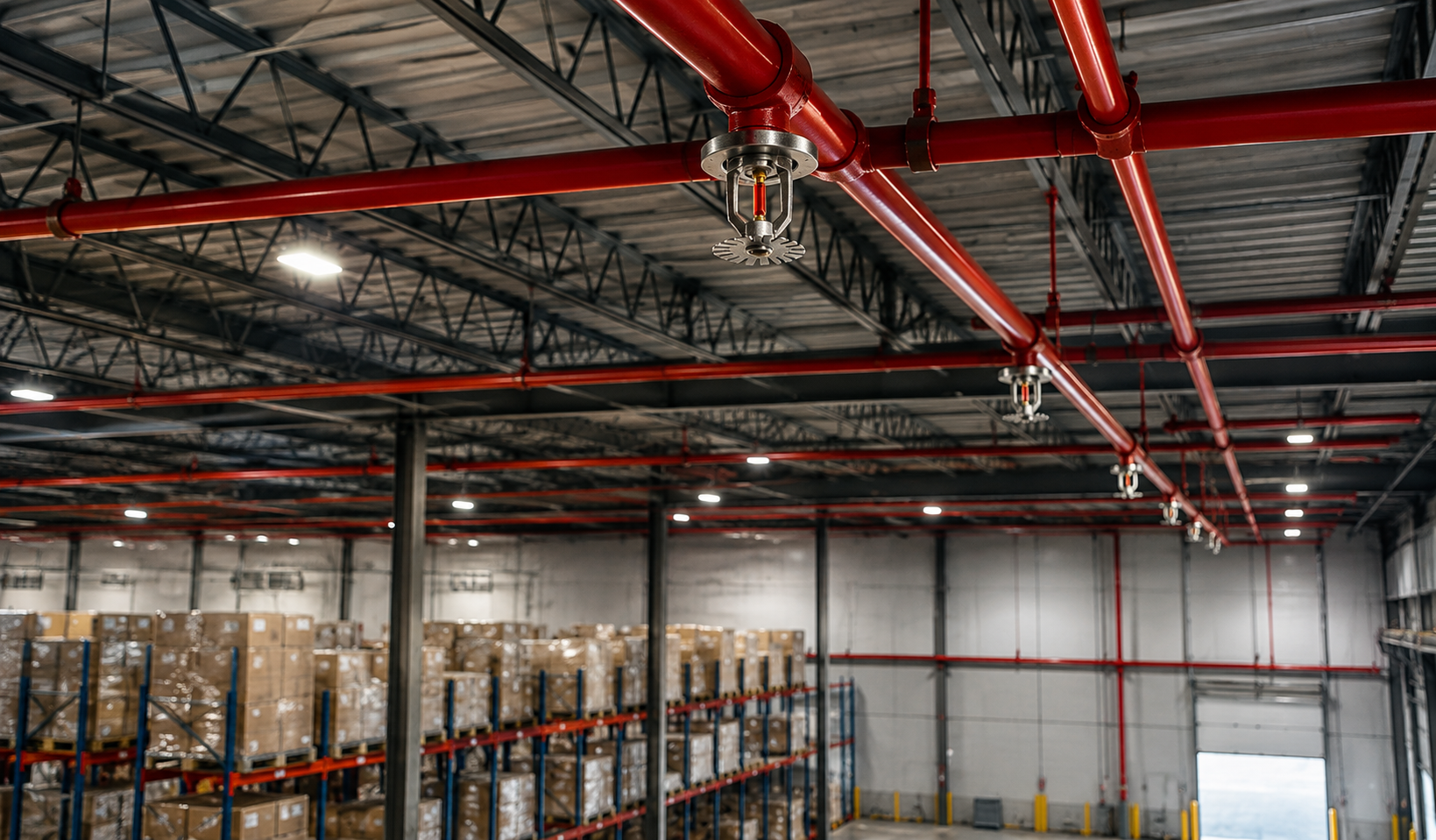
Each sprinkler head is an independent, heat-activated device. A small, heat-sensitive glass bulb or metal link holds a plug in place. When the air temperature around a specific sprinkler head reaches a certain point (usually 135-165°F), the bulb breaks, and only that single sprinkler activates, spraying water directly onto the fire below.
- Why They’re Effective: They attack the fire in its earliest stages, often extinguishing it long before the fire department arrives. According to the NFPA, the fire death rate is an astonishing 89% lower in properties with sprinklers compared to those without [3].
- The California Standard: Most new multifamily buildings in California are required to have fire sprinkler systems compliant with NFPA 13R, a standard specifically designed for residential structures.
Pillar 2: Advanced Fire Alarm Systems (The Instant Alert)
If sprinklers are the firefighters, the fire alarm system is the dispatcher and the town crier, all in one. Its job is to detect a fire at the first possible sign and alert everyone immediately.
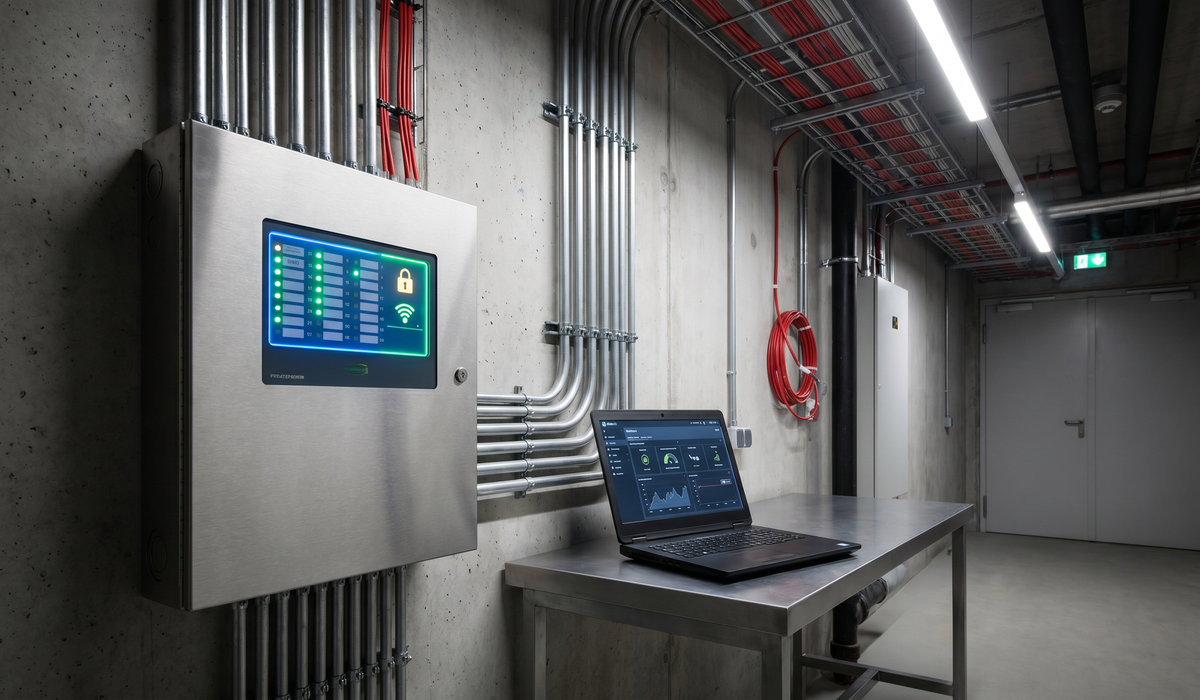
- Early Detection: Modern systems use a network of sophisticated smoke and heat detectors. Unlike standalone smoke alarms, these system detectors are all wired together. When one detects smoke, it sends a signal to the main control panel.
- Clear Notification: The panel then activates horns and strobes throughout the building, providing both audible and visual alerts to ensure everyone is notified, including those who are hearing impaired or in a noisy environment.
Calling for Help: In most California multifamily properties, the fire alarm system is also required to be monitored by a central station. This means that as soon as an alarm is triggered, a signal is automatically sent to a 24/7 monitoring center, which then dispatches the local fire department. This happens in seconds, without anyone needing to pick up a phone.
Pillar 3: Compartmentation & Fire-Rated Doors (Containing the Threat)
Imagine a fire breaks out in one apartment unit. The goal is to keep it there. This is the principle of compartmentation—dividing a building into a series of fire-resistant boxes to prevent smoke and flames from spreading.
- Fire-Resistant Walls: The walls, floors, and ceilings between apartment units and in hallways are built with fire-resistant materials (like specific types of drywall) designed to withstand fire for a set period, typically one hour or more.
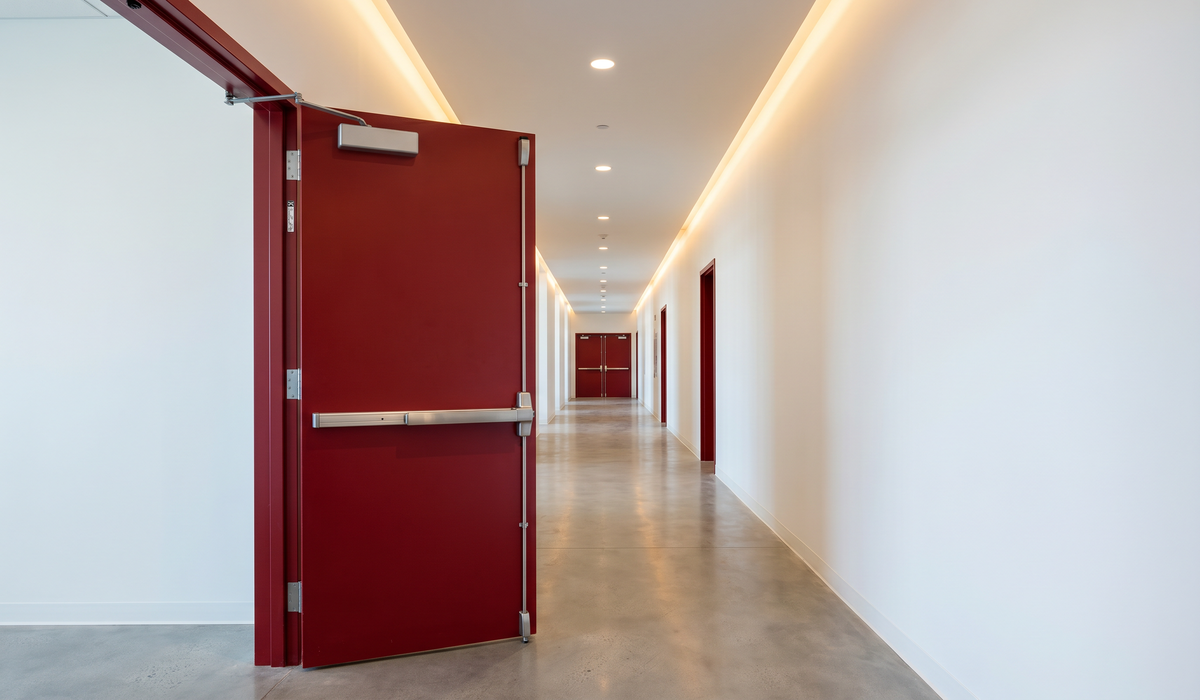
- Self-Closing Doors: This is a simple but incredibly important feature. The doors leading from apartment units into the hallway are required to be fire-rated and equipped with a self-closing mechanism. This ensures that if a resident flees a fire in their unit, the door closes behind them, containing the fire and protecting the escape route for everyone else.
Pillar 4: Reliable Means of Egress (A Clear Path to Safety)
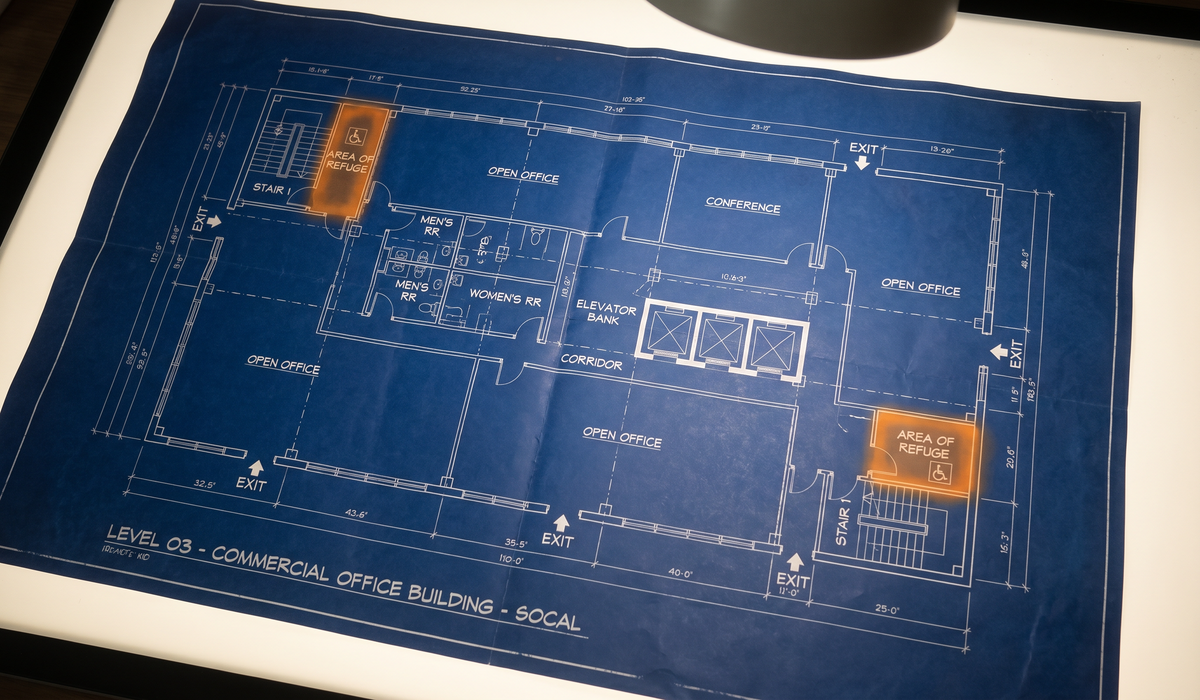
Finally, all these systems work to give residents what they need most: time to get out. The “means of egress” is the continuous and unobstructed path of travel from any point in a building to a public way. In a multifamily building, this includes the path within a unit, the hallway, the stairs, and the exit to the outside.
- Two Ways Out: A long-standing principle of fire safety is that there should always be at least two ways out. This is why most apartment buildings have multiple stairwells. It ensures that if one escape route is blocked by smoke or fire, there is always an alternative.
- Emergency Lighting: If the power goes out during a fire, emergency lighting in hallways and stairwells automatically turns on, illuminating the path to safety.
- Exit Signs: Illuminated exit signs clearly mark the path to the nearest exit, preventing confusion in a stressful situation.
The System Integration Advantage These four pillars don’t work in isolation. For example, when a fire alarm activates, it can also be designed to automatically unlock doors controlled by access control systems, ensuring residents can escape freely. This is why integrated system testing is so critical. Book a Call to get more details.
The Catch: Safety Systems Are Not “Set It and Forget It”
Having these four pillars of safety is a huge step, but it’s only half the battle. A fire sprinkler system with a closed valve, a fire alarm with a dead battery, or a fire door that’s been propped open offers a false sense of security. This is where professional testing and maintenance come in.
California law, through the adoption of NFPA codes, mandates regular testing for all of these systems. This isn’t just about administrative box-checking; it’s about functionally verifying that every component of your safety net will work when lives are on the line.
| System | California Testing Requirement | What It Means for You |
|---|---|---|
| Fire Alarm System | Annual functional test per NFPA 72 | A certified technician must test every detector, pull station, horn, and strobe in the system. |
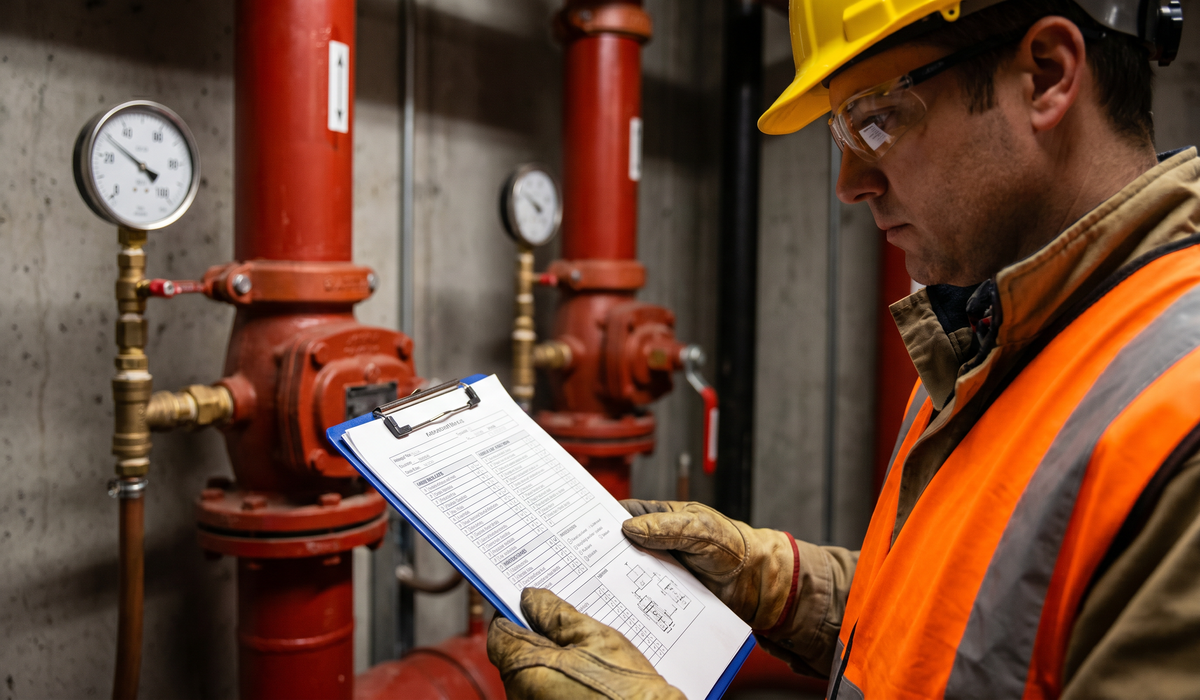
| Fire Sprinkler System | Annual inspection and testing per NFPA 25 | A certified technician must inspect the system and test components like control valves and water flow devices. |
| Emergency Lighting | Annual 90-minute discharge test | The system must be tested to ensure the backup batteries will last for the full 90-minute duration. |
| Fire-Rated Doors | Annual inspection per NFPA 80 | Doors must be checked to ensure they close and latch properly and have no damage |
How Fire Testing Solutions Ensures Your Building Stays Safe
Understanding these systems is the first step. Ensuring they work is the next. At Fire Testing Solutions, we bridge the gap between having safety systems and having true, reliable safety. Our NICET-certified technicians are trained to test and verify every component of your fire protection systems according to California codes and NFPA standards.
We provide:
- Comprehensive System Testing: We don’t just do a visual check. We perform the in-depth functional tests required by law to ensure your fire alarm, sprinkler, and emergency lighting systems are ready for an emergency.
- Integrated System Verification: We test how your systems work together, such as ensuring your fire alarm properly communicates with your access control and elevator systems.
- Detailed, Actionable Reports: After every inspection, you receive a clear report that identifies any deficiencies and provides a roadmap for bringing your building into full compliance.
- Peace of Mind: With over 40 years of experience serving Southern California property managers, we provide the expertise and reliability you need to know your building is not just “compliant,” but truly safe.
Frequently Asked Questions (FAQ)
1. What makes modern apartment buildings safer than older buildings?
Modern buildings are safer due to a layered system of fire protection. This includes automatic fire sprinklers that control fires early, advanced fire alarm systems for quick notification, compartmentation with fire-rated walls and self-closing doors to contain smoke, and reliable means of egress with emergency lighting.
2. Are fire sprinklers required in all California apartment buildings?
Most new multifamily buildings in California require the installation of automatic fire sprinkler systems. The specific requirements depend on the building’s size, height, and date of construction. Older buildings may not have been required to have sprinklers when they were built, but they are a proven life-saving feature.
3. How often do fire safety systems need to be tested in multifamily properties?
In California, fire alarm systems, fire sprinkler systems, emergency lighting, and fire-rated doors all require professional testing and inspection at least annually. Some components, like fire alarm monitoring communication, require more frequent testing (quarterly).
4. What fire safety features are required in new California apartment buildings?
New California apartment buildings typically require a full suite of integrated fire safety features, including an automatic fire sprinkler system (per NFPA 13R), a complete fire alarm and notification system, fire-rated compartmentation between units, self-closing fire doors, and a clear means of egress with emergency lighting and exit signs.
Your Partner in Multifamily Fire Safety
The safety of your residents is your top priority, and it’s ours too. While modern building codes have made apartment buildings safer than ever, that safety is only as strong as the systems in place—and those systems are only as reliable as their last inspection.
Don’t leave your residents’ safety to chance. Ensure your building’s fire protection systems are fully functional and compliant with California law. Our team is here to provide the expert testing and peace of mind you need.
Ready to verify your building’s safety?
- Book a Call: https://www.firetestingsolutions.com/contact
- Phone Number: 866-757-8378
- Email: service@firetestingsolutions.com
- Address: 700 W. First St, Suite 10, Tustin, CA 92780