Annual ERRC Testing: A Property Manager's Guide
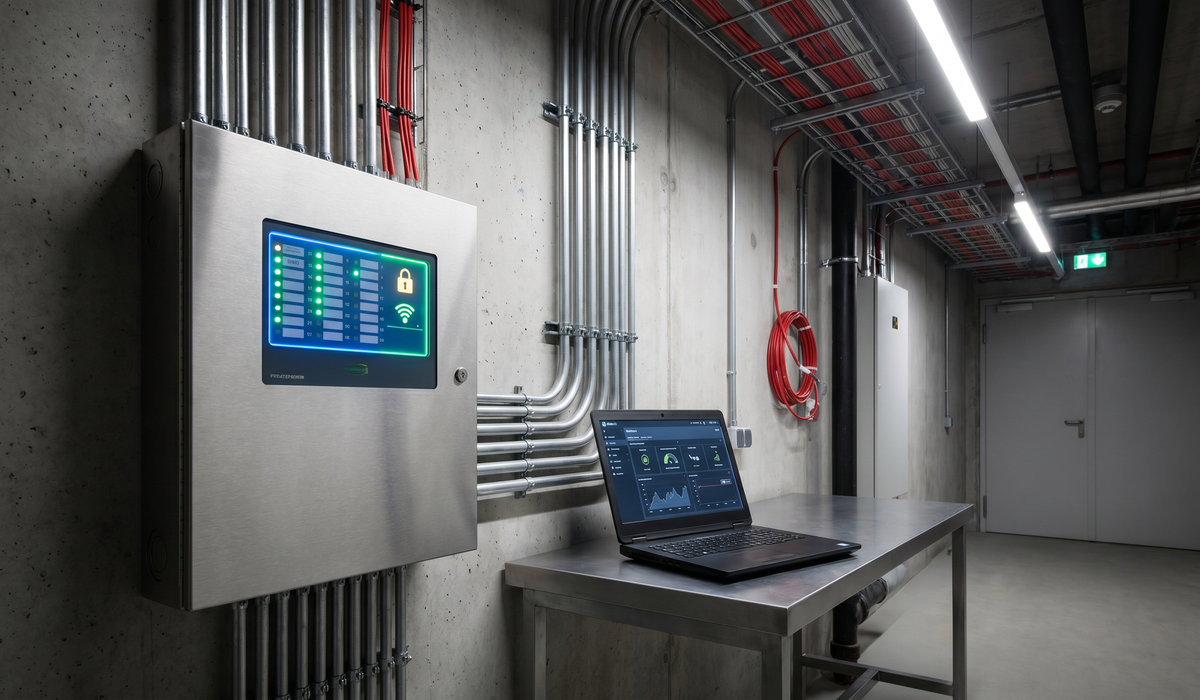
Your annual fire inspection is on the calendar. The fire marshal is coming, and you’ve checked the extinguishers, tested the smoke detectors, and inspected the sprinkler risers. But what about the Emergency Responder Radio Coverage (ERRC) system? That small box in the utility closet with the blinking green light—is it actually ready?
For many Southern California property managers, the annual ERRC test is a source of anxiety. It’s a complex system mandated by codes you’ve never read, and the pass/fail report can feel like a mystery. But it doesn’t have to be.
This guide breaks down exactly what happens during an annual ERRC test, why it’s required by California law, and how to ensure your building passes with confidence.
Why Annual ERRC Testing is Non-Negotiable in California
First, let's be clear: annual ERRC testing isn't just a good idea; it's the law. The requirement stems from a tragic lesson learned on 9/11, where firefighters were lost because their radios didn't work inside the World Trade Center towers [1]. To prevent this from ever happening again, a framework of codes was established to ensure first responders can always communicate.
| Code / Standard | What it Means for Your Property |
|---|---|
| IFC Section 510.6.1 | This is the big one. The International Fire Code explicitly mandates that all ERRC systems be tested annually to ensure they meet operational and signal strength requirements. |
| California Fire Code | California has adopted the IFC, making this annual test a legal requirement for all applicable buildings in the state. |
| NFPA 1225 | This standard from the National Fire Protection Association outlines the technical details for how the test must be conducted, including signal strength measurements and component checks. |
| Local AHJs | Authorities Having Jurisdiction (AHJs) like the LAFD, OCFA, and SDFD enforce these codes and often have their own specific reporting requirements. For example, Orange County requires test reports to be filed within 30 days. |
Failure to comply doesn't just risk the lives of first responders; it can lead to significant fines, failed inspections, and even a delayed Certificate of Occupancy for new buildings.
Bottom line: If your building has an ERRC system, you are required by law to have it professionally tested every year.
What Happens During an Annual ERRC Test? A 5-Phase Walkthrough
An annual ERRC test is more than just a quick check. It’s a comprehensive, multi-part process designed to verify every component of your system is working correctly. Here’s what you can expect our NICET-certified technicians to do:
Phase 1: System & Paperwork Verification
Before any equipment is tested, we start with the documentation. This ensures your system was designed and installed correctly from day one.
- Review As-Built Diagrams:
We check the approved plans to understand your system's layout.
- Verify FCC Licenses: We confirm the required FCC licenses for the signal booster (BDA) are current.
- Check Battery Calculations: We ensure the 12-hour battery backup system has enough capacity to last through a power outage.
Phase 2: Component Inspection
Next, we physically inspect every piece of hardware. This is a visual check to identify any signs of damage, wear, or incorrect installation.
- Donor Antenna:
Check for secure mounting and weatherproofing.
- Bi-Directional Amplifier (BDA): Inspect for proper ventilation and ensure no fault lights are active.
- Distributed Antennas: Walk the property to visually inspect all indoor antennas for damage or obstructions.
- Power Supplies & Backup Batteries: Check for corrosion, damage, and proper charging.
Phase 3: Signal Strength & Coverage Testing (The 95/95 Rule)
This is the most critical part of the test. We use specialized radio frequency (RF) testing equipment to measure the signal strength throughout your entire building to ensure it meets the 95/95 Rule.
- Grid Testing:
We divide each floor into a grid and take signal strength readings in each section.
- Critical Areas: We pay special attention to "critical areas" as defined by the fire code, including elevator lobbies, stairwells, fire pump rooms, and basements.
- Uplink & Downlink: We test both the "downlink" (tower to radio) and "uplink" (radio to tower) frequencies to ensure two-way communication is flawless.
- Verification: The goal is to verify that 95% of your building has a minimum signal strength of -95 dBm on all required public safety channels.
Not sure what -95 dBm means? Think of it like a passing grade. It’s the minimum signal strength required for a first responder’s radio to work clearly and reliably. Anything less is a failing grade.
Phase 4: Alarm Integration & Failsafe Testing
Your ERRC system must work in harmony with your fire alarm system. We simulate various failure scenarios to ensure the proper notifications are sent.
- Fire Alarm Integration:
We confirm that if the fire alarm activates, your ERRC system sends a supervisory signal to the fire alarm control panel.
- Power Failure Test: We disconnect AC power to verify the system seamlessly switches to its 12-hour battery backup.
- Antenna Failure Test: We simulate a donor antenna malfunction to ensure the system sends the required trouble signal.
Phase 5: Reporting & Documentation
After the test is complete, we don’t just give you a thumbs-up. We provide a comprehensive documentation package that proves your compliance to any fire marshal or AHJ.
- Detailed Test Report:
A multi-page report showing all readings, pass/fail results for each component, and technician notes.
- Coverage Maps: Visual floor plans showing the signal strength in every part of your building.
- AHJ Filing: We prepare and file the official report with the appropriate local authorities on your behalf.
How Fire Testing Solutions Makes ERRC Compliance Simple
As a Southern California property manager, you have enough on your plate without becoming an expert in radio frequency engineering. The complexity of ERRC compliance—from understanding IFC 510 to coordinating annual tests and filing reports with local jurisdictions like LAFD and OCSD—can be overwhelming.
That's where Fire Testing Solutions comes in. We don't just test your system; we manage your compliance from start to finish, making your life simpler.
| Your Challenge | The Fire Testing Solutions Solution |
|---|---|
| Complex Codes & Regulations | Our NICET-certified technicians are experts in IFC 510, NFPA 1225, and the specific requirements of LAFD, OCFA, and SDFD. We translate the code into a clear action plan for your building. |
| Coordinating Annual Testing | We schedule and manage the entire annual testing process, coordinating with your tenants to minimize disruption and ensuring all deadlines are met. |
| Uncertainty of Test Results | We perform a comprehensive 5-phase test to verify 95% coverage. You get a detailed, easy-to-understand report that clearly shows your building's compliance status. |
| Filing Reports with AHJs | We handle all the paperwork. We prepare and file the official test reports directly with the appropriate Fire Authority Having Jurisdiction (AHJ), ensuring you meet all deadlines. |
| Managing Repairs & Deficiencies | If your system fails, we don't just hand you a problem. Our technicians can diagnose the issue, provide a clear repair plan, and perform the necessary work to bring your system back into compliance quickly. |
Ready to simplify your compliance? Contact us today for a free consultation on your building's ERRC requirements.
Call Us: 866-757-8378
Frequently Asked Questions
1. How long does an annual ERRC test take?
For a typical office or multifamily building, the test usually takes 4-8 hours. Larger or more complex facilities like hospitals or high-rises can take longer.
2. Do my tenants need to be notified?
Yes, it's best practice to notify tenants that technicians will be walking the property to test signal strength. However, the testing is non-intrusive and does not require access to individual residential units unless antennas are located there.
3. What happens if my building fails the test?
If your building fails, our report will pinpoint the exact reasons—whether it's a faulty component or a coverage gap in a specific area. We will provide a clear plan of action and a quote to perform the necessary repairs or adjustments to bring your system into compliance.
4. Can I perform the test myself?
No. IFC and NFPA standards require that ERRC systems be tested by qualified personnel with specialized RF testing equipment. Most jurisdictions, including those in Southern California, require the testing to be performed by a company with a valid FCC GROL license and certified technicians.
Your Partner in First Responder Safety
That blinking green light on your ERRC panel only tells you the system has power. It doesn't tell you if a firefighter's radio will work in a smoke-filled stairwell on the 12th floor.
Annual testing is the only way to be certain that your building is ready to protect the first responders who risk their lives to protect your property and tenants. By partnering with Fire Testing Solutions, you're not just checking a box for the fire marshal—you're ensuring a lifeline stays open when it matters most.
Ready to Schedule Your Annual ERRC Test?
Don't wait for a notice of violation. Contact our team today to schedule your comprehensive annual test and ensure your building is safe and compliant.
- Book a call:
https://www.firetestingsolutions.com/contact
- Phone Number: 866-757-8378
- Email: service@firetestingsolutions.com
- Address: 700 W. First St, Suite 10, Tustin, CA 92780