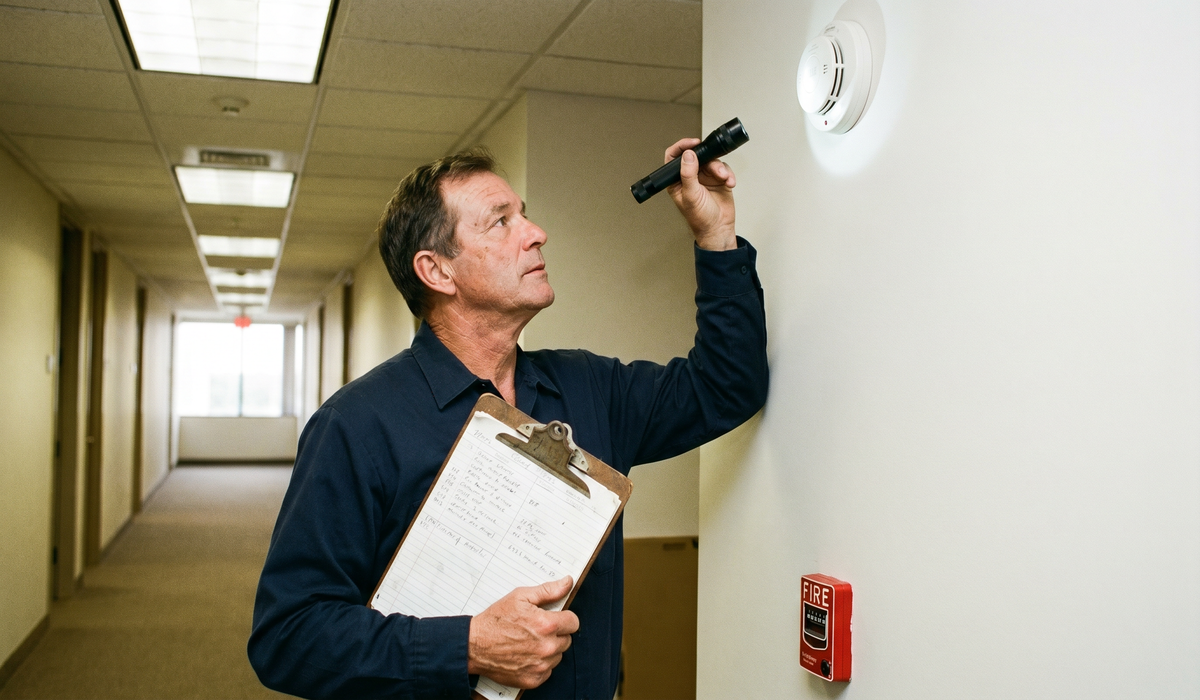
Access Control & Fire Code Compliance in California
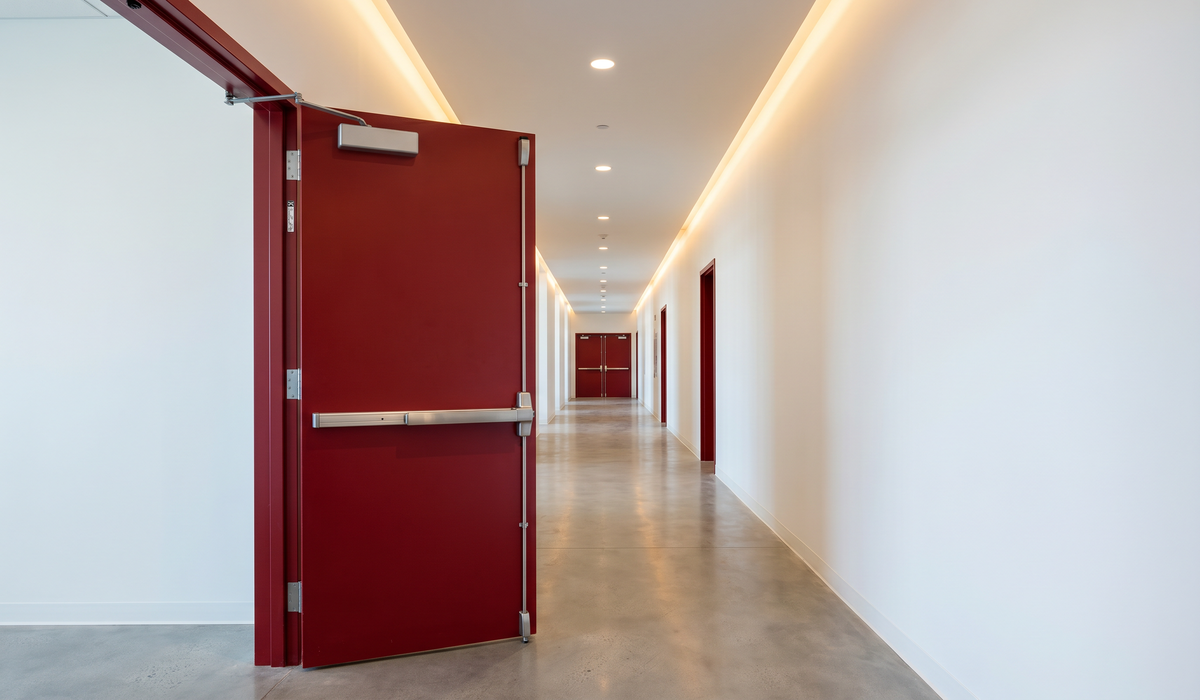
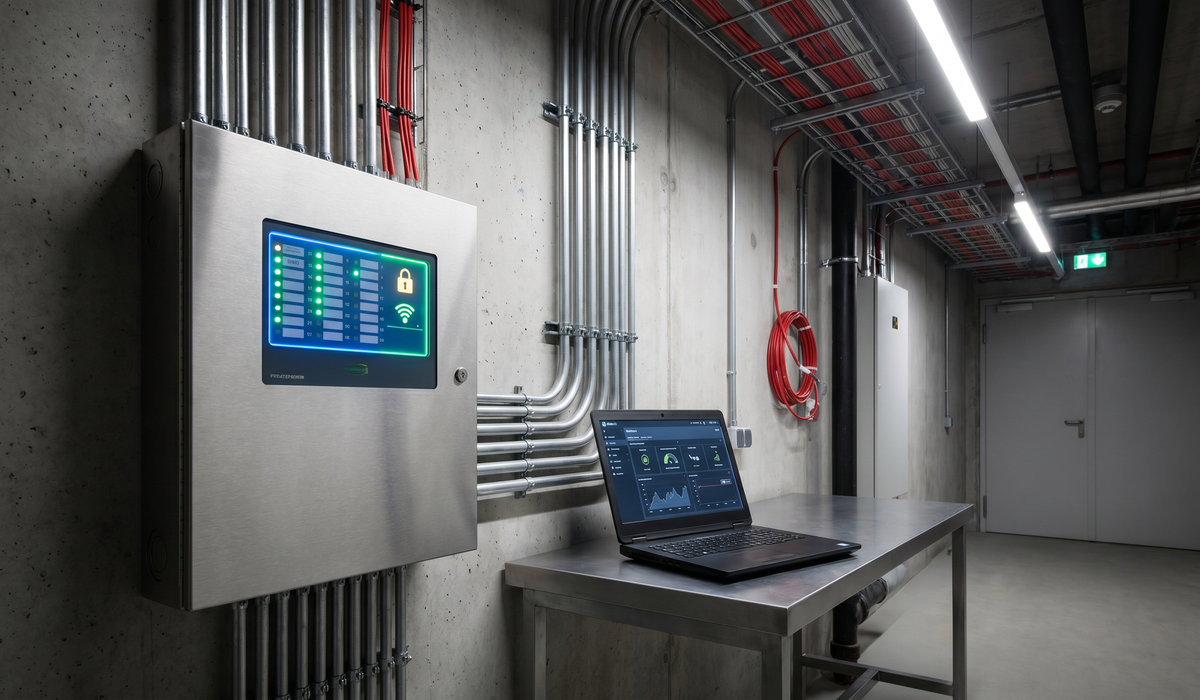
As a property manager in Southern California, you juggle a dozen priorities every day. You've likely invested in an access control system—key cards, fobs, electronic locks—to enhance tenant security and streamline property management. But what most security installers don't tell you is that the moment that system is installed on an exit door, it stops being just a security amenity and becomes a regulated life safety device.
This distinction is critical. While you see a tool for convenience and security, the local fire marshal sees a potential barrier to emergency egress and firefighter access. A system that fails to operate correctly during a fire isn't just an inconvenience; it's a significant liability. In a region all too familiar with devastating fires, from the 2020 Barrington Plaza incident to the recent fires in 2025, ensuring every life safety system functions flawlessly is non-negotiable.
This guide is designed for the diligent property manager who needs to understand the hidden fire code requirements governing their access control system. We'll explain why your security vendor isn't equipped to handle this, what the law requires, and how to ensure your property is both secure and, most importantly, safe.
The Two Sets of Rules: Building Code vs. Fire Code
One of the most common points of confusion for property managers is understanding who has authority over their access control system. The answer is that two different sets of codes apply, each with a different priority. Your security installer likely only knows about the first one.
| Code Authority | Primary Focus | What It Governs for Access Control |
|---|---|---|
| California Building Code (CBC) | Occupant Egress | Ensures tenants can exit the building safely and without obstruction during an emergency. It dictates how locks must function from the inside. |
| California Fire Code (CFC) | Emergency Responder Access | Ensures firefighters can get into your building quickly to fight fires and save lives. It dictates how your system must function from the outside for emergency personnel. |
As the Santa Clara County Fire Department explicitly states in its standards, while the CBC regulates safe egress, it "does not address the difficulties encountered by emergency responders when these systems include multiple doors that are access-controlled." This is where the local fire marshal, or Authority Having Jurisdiction (AHJ), steps in, wielding the power of the California Fire Code.
Key Takeaway: Your access control system must satisfy two masters: the Building Code for letting people out and the Fire Code for letting firefighters in. A failure in either area is a compliance failure.
Why Your Security Installer Isn't a Compliance Expert
Here’s what security installers often miss:
- Fire Alarm Integration Testing:
They may connect the access control panel to the fire alarm, but they rarely perform the functional tests to prove that the doors actually unlock during an alarm condition.
- Emergency Responder Requirements: They are often unaware of the specific local fire department requirements for Knox key switches or emergency access.
- Fire-Rated Door Nuances: They may not understand the critical requirement that a fire-rated door, when unlocked by the system, must remain positively latched to prevent the spread of smoke and fire.
This isn't a criticism of their skills; it's a clarification of their role. They are security experts, not NICET-certified fire and life safety compliance experts. Relying on them for fire code compliance is like asking an electrician to certify your plumbing—it's simply not their area of expertise.
Are you confident your access control system will unlock when the fire alarm sounds? If you're not 100% sure, Fire Testing Solutions can provide a comprehensive compliance audit. Call us today at
866-757-8378 to schedule a review or
book a call.
Fire Alarm Integration: The Non-Negotiable Connection
The single most critical fire safety requirement for an access control system is its integration with the building's fire alarm. When a fire alarm is activated, your access control system must automatically and immediately unlock all designated egress doors.
This is not optional. The International Building Code and
NFPA 101 both mandate this functionality for most lock types used on egress paths.
Fail-Safe vs. Fail-Secure: A Critical Distinction
To achieve this, all locks on egress doors must be fail-safe.
- Fail-Safe:
When power is cut, the lock
unlocks. This is the required configuration for egress doors, ensuring a power outage or fire alarm activation (which cuts power to the locks) allows people to exit.
- Fail-Secure: When power is cut, the lock remains locked. This is suitable for interior doors, IT closets, or other areas not in a required path of egress, but is a dangerous code violation on an exit door.
During an inspection, a fire marshal will test this. If they activate the fire alarm and your exit doors remain locked, your building will fail its inspection until the issue is corrected.
How Fire Testing Solutions Makes Compliance Simple
Navigating the intersection of security hardware and fire code is complex and stressful. At Fire Testing Solutions, we specialize in simplifying compliance for property managers. With over 40 years of experience in Southern California, we are not security installers; we are life safety experts who ensure your systems work when it matters most.
| Your Challenge | Our Solution |
|---|---|
| Uncertainty about fire code compliance | We perform a detailed Access Control Fire Code Audit, identifying specific violations and providing a clear path to remediation. |
| Lack of fire alarm integration testing | Our NICET-certified technicians conduct annual Fire Alarm & Access Control Integration Testing, verifying that your doors unlock as required and providing documentation for the AHJ. |
| Confusion over AHJ requirements for new installations | We provide expert plan review and AHJ coordination, ensuring your design meets all local fire code requirements before you spend a dollar on installation. |
| Concerns about emergency responder access | We verify your Knox key switch or box is installed correctly and functions as required by the California Fire Code, ensuring firefighters have immediate access in an emergency. |
Frequently Asked Questions (FAQ)
Q: Do I need to have my access control system tested every year like my fire alarm?
A: While the fire code doesn't mandate a specific annual test for the access control system itself, it
does require that its integration with the fire alarm system be fully functional at all times. We strongly recommend an annual integration test to ensure this critical life safety feature works and to provide a record of due diligence.
Q: My security vendor said they connected the system to the fire alarm. Isn't that enough?
A: A physical connection is only the first step. The system must be functionally tested to prove it operates correctly. This involves activating the fire alarm and physically verifying that each and every controlled egress door unlocks. This is a service most security vendors do not provide.
Q: What is a Knox Box or Knox Switch?
A: This is a secure, key-operated switch or lockbox that only the local fire department can access. The California Fire Code requires this on buildings with access control to give firefighters a way to override the system and gain entry during an emergency without causing damage.
Q: Can I use magnetic locks (mag locks) on my exit doors?
A: Yes, but they are heavily regulated. They must be fail-safe, unlock upon fire alarm activation, and have a clearly marked "Push to Exit" button nearby that directly cuts power to the lock. The specific requirements depend on your building's occupancy type, and the AHJ has the final say.
Your Partner in Life Safety Compliance
Your access control system is a powerful tool, but it comes with significant responsibilities. Ensuring it meets the stringent demands of both the building and fire codes is not just about avoiding fines or failed inspections—it's about protecting the lives of your tenants and ensuring emergency responders can do their jobs.
Don't leave this critical task to your security installer. Trust the life safety experts with over 40 years of experience serving Southern California property managers.
Contact Fire Testing Solutions today for a complimentary consultation on your access control system's compliance.
- Phone:
866-757-8378
- Email: service@firetestingsolutions.com
- Book Online: https://www.firetestingsolutions.com/contact