Fire Alarm Testing for Multifamily Properties: Your NFPA 72 Guide
The Barrington Plaza Parallel: A Sobering Lesson in “Compliance”
On January 29, 2020, a fire erupted on the 7th floor of the Barrington Plaza, a 26-story apartment building in West Los Angeles. The results were devastating:
- 14 people were injured, including a 3-month-old baby.
- 339 residents were evacuated and displaced.
- It took 335 LAFD firefighters to control the blaze.
Here’s the most chilling part: the building had been inspected by the fire department just
seven months earlier and was found to be “in compliance” with the fire code at the time [1]. The 1961 building was not equipped with sprinklers, which wasn't required for a building of its age. While technically compliant on paper, the fire proved the building was not safe in a real-world emergency. It highlights a terrifying gap between administrative compliance and functional, life-saving readiness.
Is your property just “compliant,” or is it truly safe? Don’t wait for an emergency to find out. If you’re unsure about your fire alarm system’s status, call us today at 866-757-8378 for a no-obligation consultation.
Which Multifamily Properties Require Fire Testing in California?
Let’s clear up a common point of confusion. The answer is simple: ALL multifamily properties in California with a fire alarm system are required by law to have that system professionally tested.
This isn’t just a suggestion; it’s mandated by codes that are legally enforced across the state, including in Los Angeles, Orange, and San Diego counties.
Here’s how the laws break down:
- California Fire Code &
NFPA 72: The state of California adopts the National Fire Protection Association (NFPA) codes as law.
NFPA 72 is the specific code for Fire Alarm and Signaling Systems. It explicitly details the testing, inspection, and maintenance schedules that must be followed.
- The R1/R2 Inspection Program: This is a California State Fire Marshal mandate that requires local fire departments, like the LAFD, to conduct annual inspections on all residential buildings with 3 to 15 units [2]. While the inspector will check for general fire safety, they are verifying compliance—not performing the deep functional tests your system needs.
Think of it like this: The R1/R2 inspection is like the DMV checking that your car has headlights. The NFPA 72 testing is like a mechanic actually turning on the headlights, checking the wiring, and ensuring they’ll work on a dark, rainy night.
Decoding NFPA 72: Your Annual Fire Alarm Testing Checklist
So, what does a professional fire alarm test actually involve? It’s far more than just looking at the panel. A certified technician will perform a series of functional tests to ensure every component works together as a life-saving system. Here’s what that looks like:
| Component Tested | What Happens During the Test | Frequency |
|---|---|---|
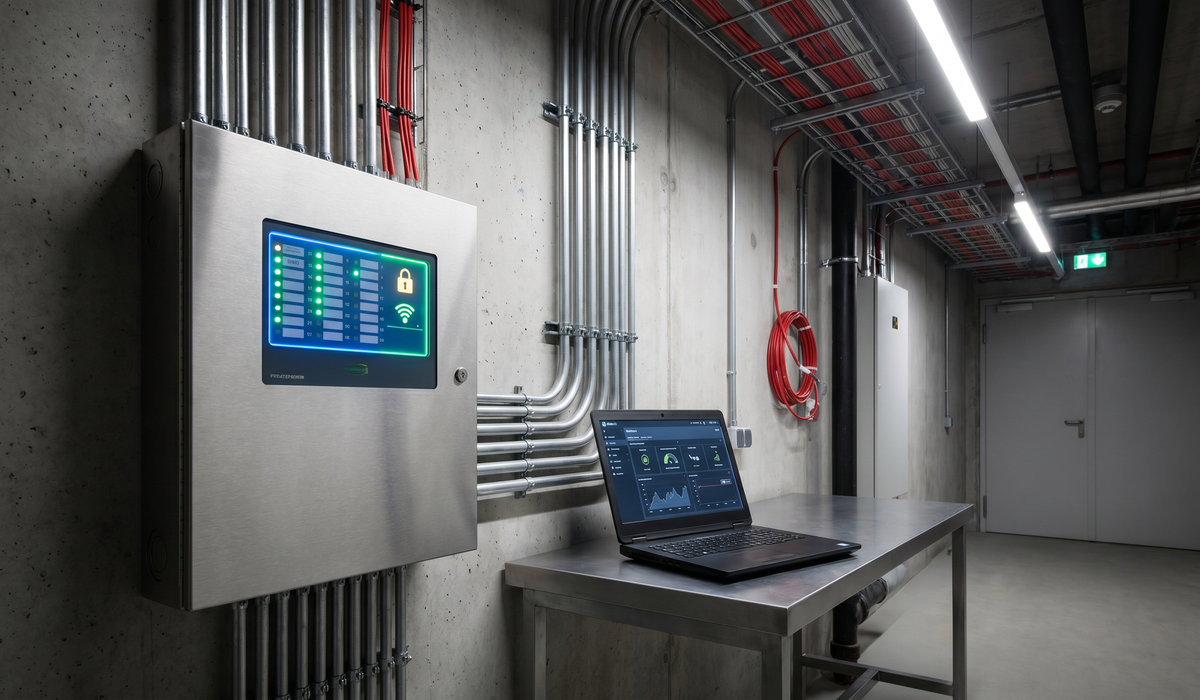
| Fire Alarm Control Panel (FACP) | The technician tests the panel’s primary power, battery backup, and all its internal functions and communication pathways. | Annually |
| Smoke & Heat Detectors | Each detector is tested with a listed aerosol spray or calibrated heat source to ensure it triggers an alarm. | Annually |
| Manual Pull Stations | Every single pull station in the building is activated to confirm it sends a signal to the main panel. | Annually |
| Notification Appliances | All horns, strobes, and speakers are activated to ensure they are loud enough and bright enough to alert all residents. | Annually |
| Battery & Backup Power | The system is switched to backup power to verify the batteries can carry the full load for the required duration. | Annually |
| Monitoring Communication | A test signal is sent to the central monitoring station to confirm the system is successfully calling for help. | Quarterly |
This is not a simple checklist. It’s a complex, multi-step process that requires specialized tools and a deep understanding of NFPA 72. Skipping any of these steps means you have a hole in your safety net.
Frequently Asked Questions (FAQ)
1. How often do my smoke detectors really need to be tested?
According to NFPA 72, all smoke detectors in your building’s common areas and within the system must be professionally tested for functionality
annually. The sensitivity of the detectors must also be verified within one year of installation and every two years thereafter to prevent false alarms or failures.
2. What happens if my building fails a fire alarm test?
If a device or component fails, it must be repaired or replaced immediately to bring the system back into compliance. A certified fire safety company will provide you with a detailed report of deficiencies and a plan to correct them. Ignoring a failed test can lead to massive fines and liability in the event of a fire.
3. Can my own maintenance staff perform these tests?
While your staff can and should perform monthly visual inspections (e.g., checking for a green light on the panel), they are
not qualified to perform the annual functional tests required by NFPA 72. These tests must be conducted by trained, certified technicians who have the proper equipment and can legally certify the results.
4. How much does professional fire alarm testing cost?
The cost varies depending on the size of your building and the number of devices. However, the cost of professional testing is a tiny fraction of the potential costs of non-compliance, which can include fines, lawsuits, and, most importantly, the loss of life. The cost of inaction is always higher.
Don’t Settle for “Compliant.” Be Safe.
The green light on your fire alarm panel is a starting point, not a guarantee. The lesson from the Barrington Plaza fire is clear: administrative compliance means nothing if the system fails when it’s needed most.
Protecting your residents and your investment requires going beyond visual checks. It requires professional, functional testing by certified experts who understand the complexities of NFPA 72 and Southern California’s local regulations.
Ready to ensure your property is truly safe?
Our team of certified technicians can provide a comprehensive, NFPA 72-compliant fire alarm test and give you the peace of mind that your system is ready for anything.
Contact Us Today for a Free Compliance Evaluation
Don’t leave your residents’ safety to chance. Let our experts help you navigate the complexities of fire safety compliance.
- Book a Call:
https://www.firetestingsolutions.com/contact
- Call Us: 866-757-8378
- Email: service@firetestingsolutions.com
- Visit Us: 700 W. First St, Suite 10, Tustin, CA 92780