Fire Safety Week is Ending: Why Fire Prevention Should Be a Year-Round Priority for Building Managers

Seth Kozlik
As Fire Safety Week (October 6th to October 12th) comes to a close, the key messages about fire prevention and safety should continue to resonate throughout the year. Fire Safety Week, established by the National Fire Protection Association (NFPA), is a reminder for building managers to prioritize fire safety every day, ensuring that commercial buildings remain safe from fire risks.

Its origins date back to the Great Chicago Fire of 1871, a catastrophic event that destroyed over 17,000 structures and resulted in approximately 300 deaths. In response, the NFPA established Fire Prevention Week to highlight the importance of fire safety, especially in urban areas with dense populations and high-risk buildings. 

Educating building managers about fire life safety systems—such as fire sprinkler system inspections, fire alarm inspections, and fire extinguisher inspections—helps mitigate the risks of fire-related accidents.

Tips to Prevent Fires in Commercial Buildings

Fire prevention starts with proactive steps to minimize risks. Here are five essential tips:


  1. Maintain Clear Exits: Always keep emergency exits unobstructed. Regularly inspect and clear hallways, stairwells, and exits.
  2. Monitor Electrical Equipment: Electrical systems and equipment are common sources of fires in commercial buildings. Regularly inspect wiring, outlets, and electrical appliances for signs of wear, and replace damaged equipment promptly.
  3. Properly Store Flammable Materials: If your building handles flammable substances (e.g., chemicals, paper, or fuel), ensure that these materials are stored safely and far from heat sources. Provide proper ventilation and signage in storage areas.
  4. Train Employees in Fire Safety: Educating employees on fire prevention and response is critical. Conduct regular fire drills, teach the proper use of fire extinguishers, and ensure everyone knows the evacuation routes and assembly points.
  5. Install and Maintain Fire Alarms and Sprinklers: Ensure that fire life safety systems, such as fire alarms and sprinklers, are installed and in good working order. Regular inspections and maintenance help detect malfunctions early, reducing fire risks.

Essential Fire Safety Inspections: Ensuring Compliance and Safety

Fire safety compliance involves regular inspections to confirm that safety systems are fully functional and adhere to legal requirements. Here are three important inspections to prioritize:


  1. Fire Sprinkler System Inspections: Sprinklers are essential for containing fires in their early stages. Inspections should confirm that the sprinklers are not blocked, corroded, or otherwise damaged.
  2. Fire Alarm Inspections: Fire alarms are your first line of defense, providing early warnings of fire hazards. Regular testing ensures that detectors are responsive and the alarm system is connected to emergency services.
  3. Fire Extinguisher Inspections: Make sure fire extinguishers are placed in accessible locations, are properly labeled, and are fully charged. Extinguishers should be inspected regularly to verify that they are ready for use.
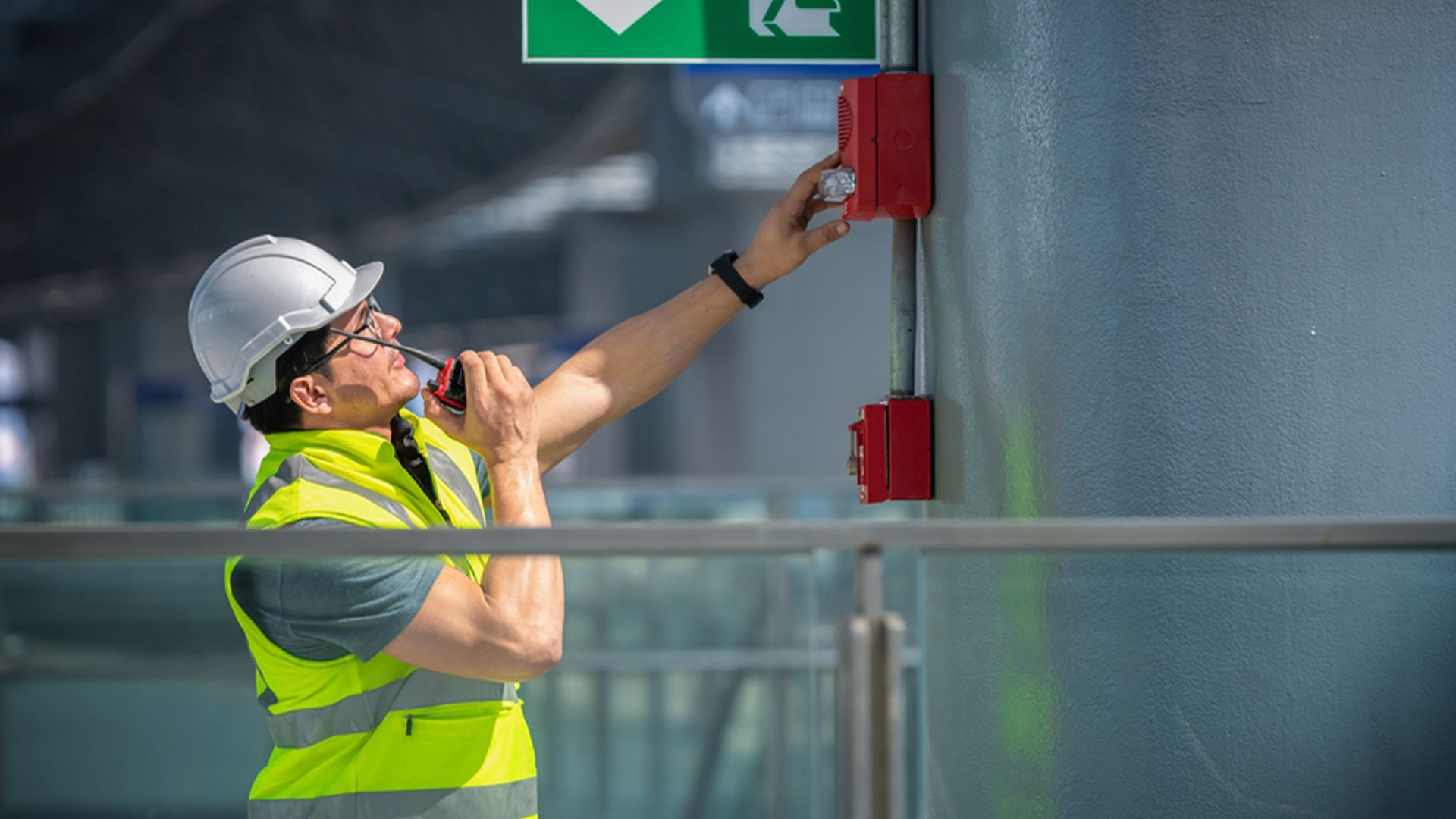


Fire Safety Inspector

Inspect Electrical Wiring

Electrical wiring is a common culprit in fire outbreaks, making regular inspections crucial to fire prevention. Here are four key points to consider:


  1. Look for Frayed Wires: Over time, wiring can become worn or damaged, which can lead to sparks and fires. Frayed or exposed wires should be replaced immediately.
  2. Avoid Overloading Circuits: Plugging too many devices into a single outlet can overload circuits, increasing the risk of overheating and fire. Make sure electrical loads are distributed properly.
  3. Inspect Electrical Panels: Ensure that electrical panels are well-maintained, labeled, and accessible. Overheating or faulty panels can quickly cause fires.
  4. Use Certified Electricians for Repairs: Always use licensed electricians to handle electrical repairs and maintenance. Improperly installed wiring can be a serious fire hazard.

Install Spark Arrestors

Spark arrestors are crucial devices that prevent sparks from igniting flammable materials, especially in areas where fire hazards are high. Here’s why they are important:


  1. Prevent Roof Fires: Chimney spark arrestors can stop hot embers from landing on roofs or nearby structures, reducing the risk of fire.
  2. Protect Industrial Areas: In industrial buildings that use heavy machinery or welding equipment, spark arrestors help prevent fires caused by stray sparks.
  3. Easy to Install: Spark arrestors are relatively simple to install and maintain, offering an affordable and effective way to reduce fire risks.

Know Your Local Emergency Numbers

In Southern California, including Orange County, knowing the appropriate emergency numbers is crucial for a quick response during a fire emergency. While 911 is the standard emergency number in the U.S., building managers should also be aware of local fire department hotlines or non-emergency numbers for fire prevention inquiries.


For Orange County, the
Orange County Fire Authority (OCFA) is responsible for fire protection services. Building managers should have the following numbers on hand:


OCFA Emergency

Dial 911 for immediate fire emergencies.


OCFA Non-Emergency:

For non-emergency fire-related questions or services, contact OCFA at 714-573-6000.


Stay Informed About Fire Season

In Southern California, fire season can be especially dangerous due to dry conditions and strong winds. Building managers should stay informed about fire risks during the fire season, typically from May to October. Pay attention to local fire advisories, ensure that fire prevention systems are ready, and reduce outdoor fire hazards by clearing dry vegetation near your property.


Click here to Book an Inspection with us

Person walking through a bright modern office hallway with glass partitions and wood-paneled walls
By Seth Kozlik May 26, 2026
Learn the critical nurse call system compliance requirements for Orange County hospitals, skilled nursing, and assisted living facilities under California Title 22, CBC Section 1224, and UL standards.
By Seth Kozlik May 23, 2026
California shopping malls must maintain four integrated fire protection systems to stay compliant: automatic sprinklers, fire alarm and EVACS, smoke control, and means of egress. Learn what each pillar requires under the California Fire Code and NFPA standards.
Row of beige portable buildings with steps along a paved path on a sunny day
By Seth Kozlik May 13, 2026
Are your portable classrooms properly integrated into the campus fire alarm system? Learn the DSA 25-foot rule, NFPA 72 testing requirements, and California Fire Code mandates for relocatable school buildings.
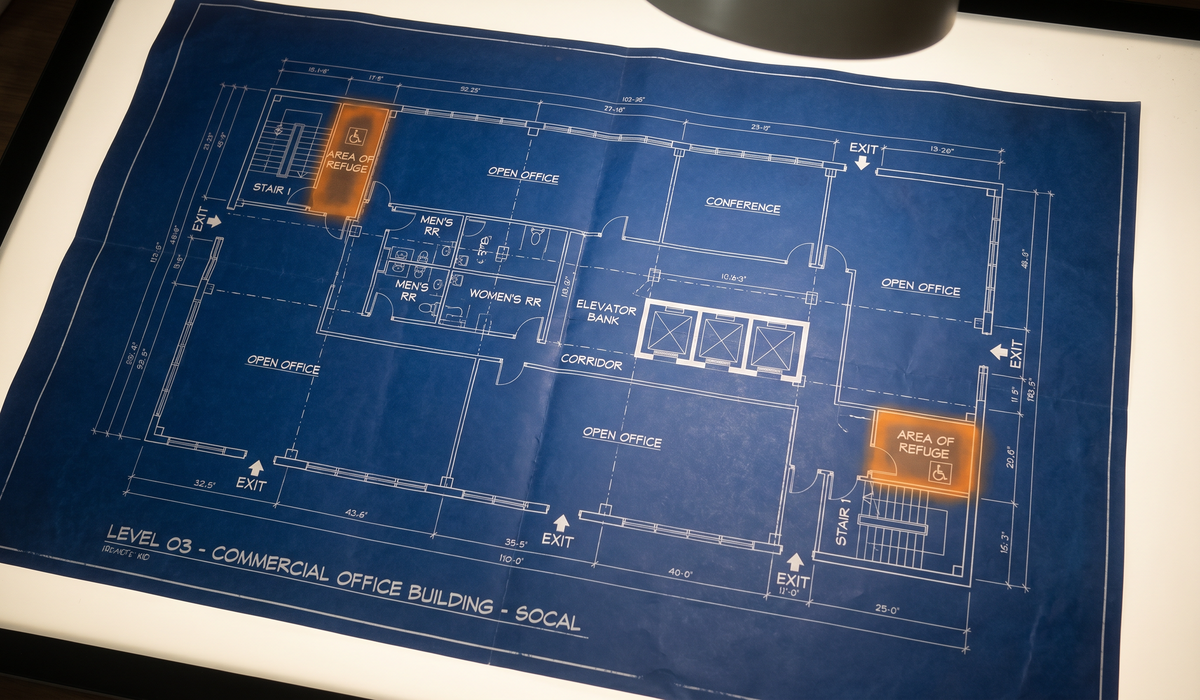
Blue architectural blueprint with white floor plan lines and two orange labels on a table
By Seth Kozlik May 8, 2026
Does your Southern California commercial building legally require an Area of Refuge? Learn which buildings need one under the California Building Code, what the law requires, and how to stay compliant.
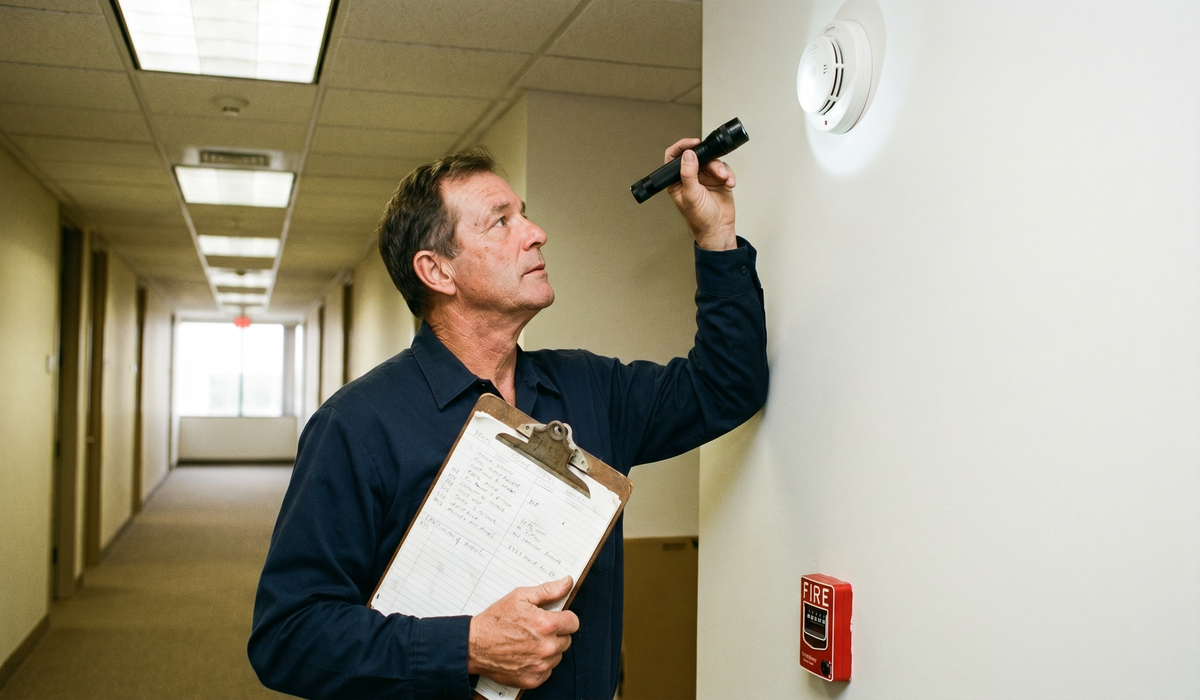
Maintenance worker inspecting a hallway wall with a flashlight and clipboard
By Seth Kozlik April 28, 2026
Not sure who is responsible for fire alarm compliance in your Southern California commercial property? Learn what California law says about property owners, managers, AHJs, and licensed contractors.
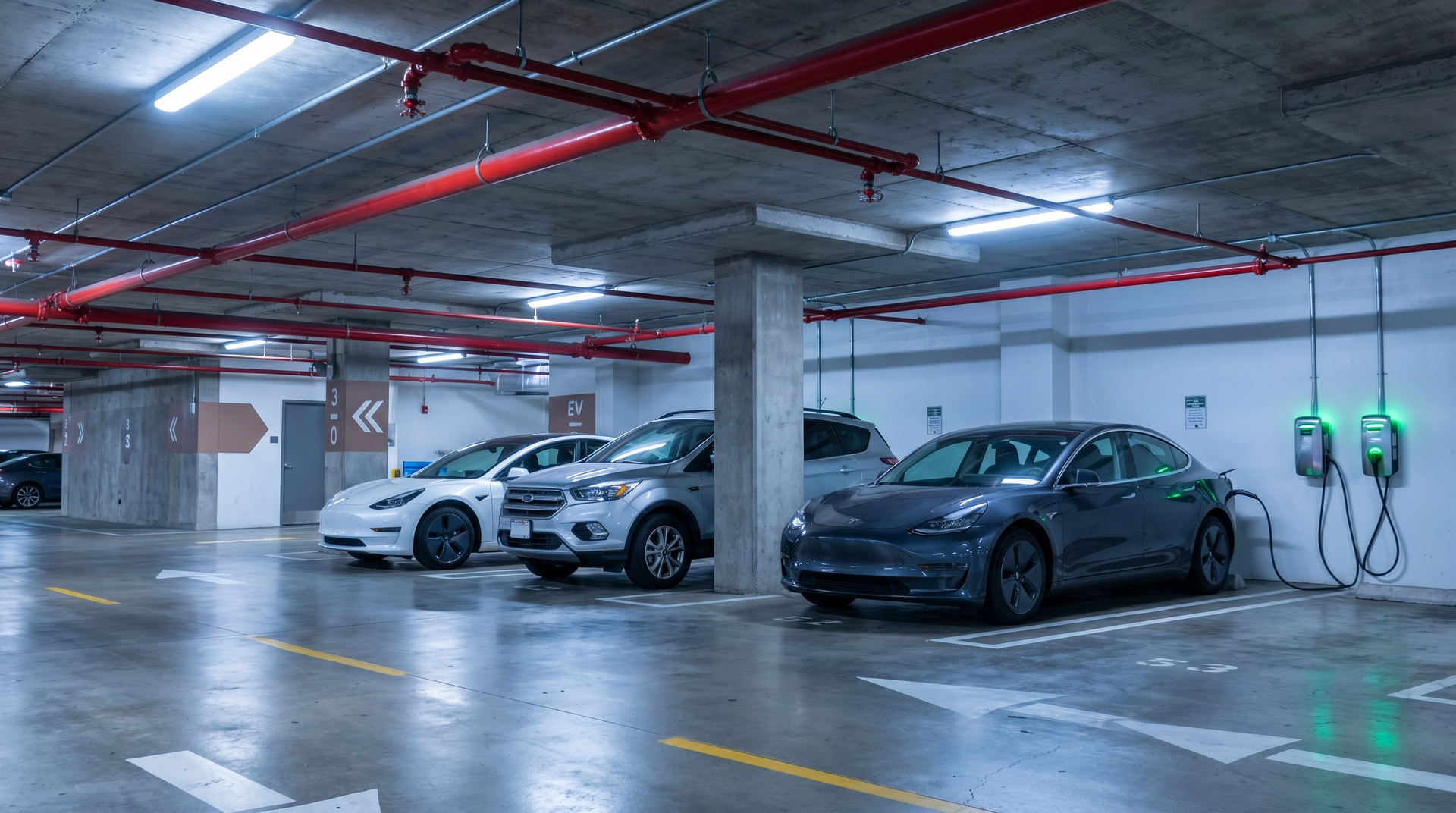
Underground parking garage with three parked cars and EV charging stations on the right.
By Seth Kozlik April 22, 2026
Adding EV chargers to your Southern California parking garage? Learn what NFPA 13 and NFPA 88A require for sprinkler systems — and how to stay compliant.
A long, perspective view of a warehouse aisle with pallets stacked high on metal shelving under bright overhead lights.
By Seth Kozlik April 15, 2026
Managing a cold storage facility in Southern California is complex enough without the constant worry of fire code violations. If you are a property manager or compliance officer, understanding how your fire alarm system integrates with your specialized sprinklers is the key to passing your next inspection and keeping your facility safe. Imagine this scenario: It is 2:00 AM at your cold storage distribution center in the Inland Empire. A small electrical fire starts near a forklift charging station. In a standard warehouse, the heat would rise, a sprinkler head would pop, and water would extinguish the flames. But in a freezer environment, standard sprinklers cannot be used because the water inside the pipes would freeze solid, destroying the system and ruining your inventory. Instead, cold storage facilities rely on highly specialized, dry-pipe systems—specifically, double interlock pre-action systems. But here is the catch that catches many property managers off guard: these complex sprinkler systems are entirely dependent on your fire alarm system to function. If the fire alarm integration fails, the sprinklers will not activate. This guide breaks down the critical requirements of NFPA 72 (the National Fire Alarm and Signaling Code) as it applies to cold storage environments. We will explain how these systems work together, what California law requires, and how proactive compliance can actually simplify your facility management.
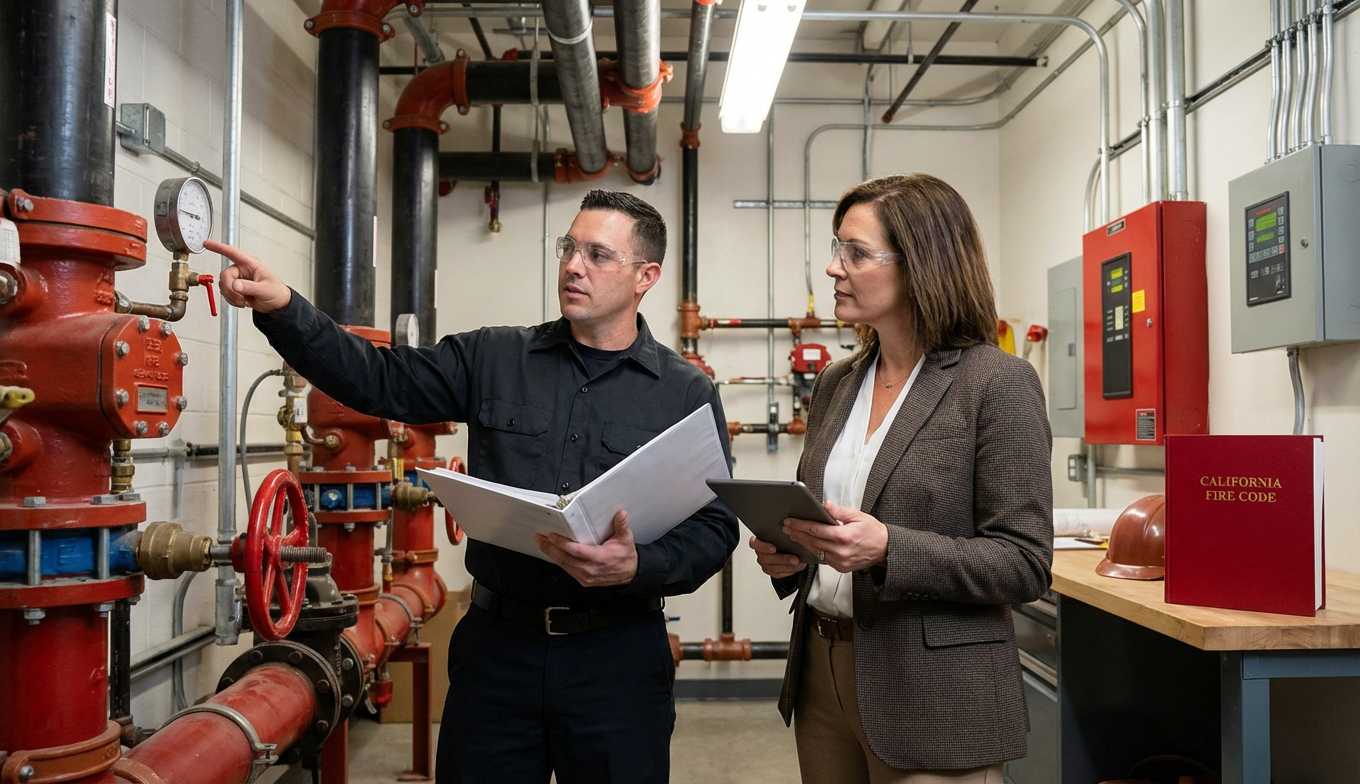
A person in uniform points to a gauge on red pipes while discussing equipment with a colleague holding a tablet.
By Seth Kozlik April 8, 2026
Everything Southern California property managers need to know about fire & life safety compliance — NFPA 72, NFPA 25, Title 19, California Fire Code, and multifamily requirements. Stay legal and protect your properties.
A technician's workspace inside a van shows tools, a yellow hard hat, and a clipboard, with a building visible outside.
By Seth Kozlik March 31, 2026
A severe shortage of skilled fire protection technicians is creating major compliance risks for Southern California property managers. Learn why you need to act now to avoid violations and secure your building’s safety.
More Posts