How Low Water Pressure Can Cause Your Fire Sprinkler System to Fail During an Emergency

Seth Kozlik

A Hidden Risk Many California Property Managers Overlook

Imagine a fire starts in your commercial building after business hours. The fire sprinkler system activates exactly as designed. The sprinkler heads open. The alarm system sends the notification. Everything appears to be working.


But there is one problem. There is not enough water pressure reaching the sprinkler system. As a result, the sprinklers cannot discharge enough water to control the fire. What could have been a small, contained incident quickly becomes a major property loss.


Many property owners and facility managers assume that if sprinklers are installed, they are protected. In reality, a fire sprinkler system is only as effective as the water supply behind it.


This is why water pressure, fire hydrant flow testing, fire pump testing, and NFPA 25 inspections play such a critical role in protecting commercial properties throughout California.

Understanding How Fire Sprinkler Systems Work

A fire sprinkler system requires three things: water, adequate pressure, and adequate flow. Think about watering your garden. If you barely open the faucet, water still comes out of the hose, but it may not travel far enough to reach the plants. Fire sprinkler systems work the same way.

Why Water Pressure Matters During a Fire

Research from the National Fire Protection Association (NFPA) shows that properly functioning fire sprinkler systems significantly reduce fire-related deaths and property damage. However, that protection depends on having sufficient water supply available when the emergency occurs.


Low water pressure can lead to: Reduced sprinkler discharge Inadequate water coverage Delayed fire control Increased property damage Greater risk to occupants and firefighters Five Common Causes of Low Water Pressure


  1. Underground Pipe Corrosion
  2. Partially Closed Control Valves
  3. Municipal Water Supply Changes
  4. Underground Water Leaks
  5. Fire Pump Deficiencies

Why Fire Hydrant Flow Testing Matters

A 5-year fire hydrant flow test helps verify available water flow (GPM), static pressure, residual pressure, and overall water supply performance. The results help determine whether sufficient water is available to support your sprinkler system during a fire.

What Types of California Properties Require Fire Protection Testing?

Examples include apartment complexes, condominiums, hospitals, medical office buildings, schools, colleges, office buildings, retail centers, shopping malls, warehouses, manufacturing facilities, and distribution centers.

Warning Signs Your Property May Have Water Supply Problems

Low-pressure alarm activations Frequent fire pump cycling Failed hydrant flow tests Corrosion in underground piping Pressure fluctuations Failed sprinkler inspections


How Fire Testing Solutions Helps Property Managers

Fire Testing Solutions provides: NFPA 25 sprinkler inspections and testing Fire pump testing NFPA 72 fire alarm testing Compliance documentation Deficiency identification and management.

Frequently Asked Questions

What water pressure does a fire sprinkler system need?

The required pressure depends on the building's hydraulic design and occupancy classification.


Can sprinklers activate if water pressure is low?

Yes, but low pressure may reduce the effectiveness of water discharge.


Can low water pressure cause a failed inspection?

Yes. Water supply deficiencies can result in inspection findings and corrective actions.


Can a failed hydrant flow test affect my sprinkler system?

Absolutely. A failed flow test may indicate insufficient water supply to meet system demand.


Protect Your Property Before an Emergency Happens

Regular hydrant flow testing, fire pump testing, sprinkler inspections, and fire alarm testing help

verify that your entire fire protection system is ready to perform when it matters most.

Contact Fire Testing Solutions Today

Book a Call: https://www.firetestingsolutions.com/contact

Phone: 866-757-8378

Email: service@firetestingsolutions.com

Address: 700 W. First St, Suite 10, Tustin, CA 92780


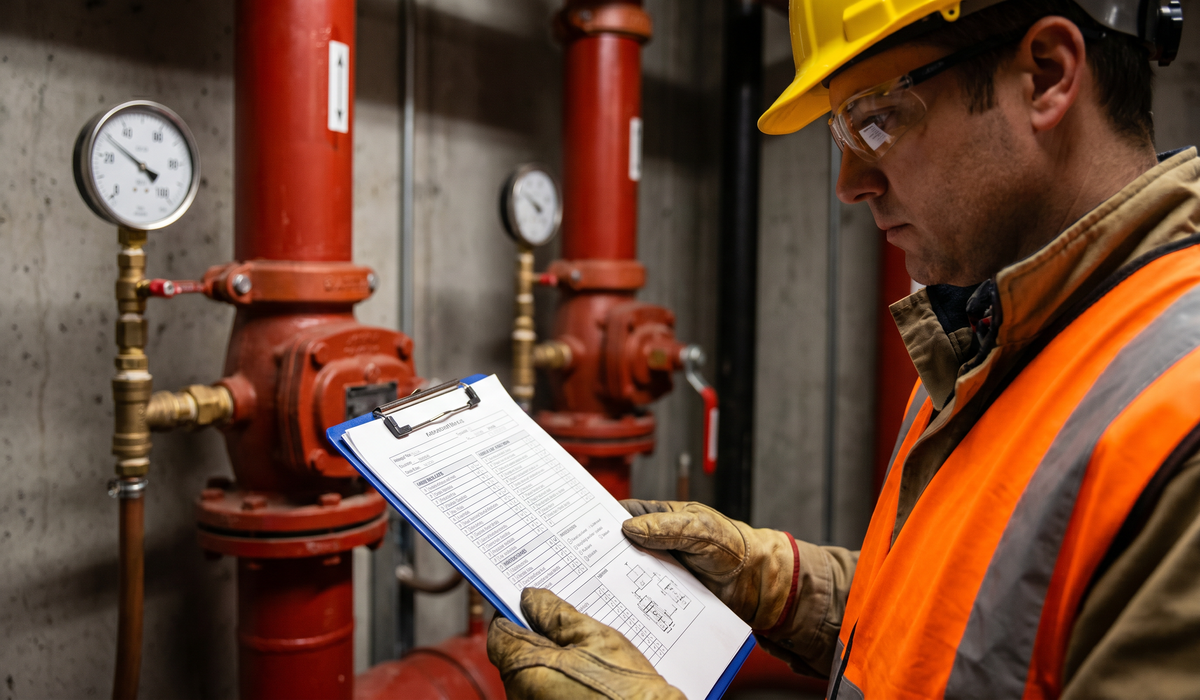
Inspector in hard hat reviewing a clipboard beside red industrial pipes and gauges
By Seth Kozlik June 3, 2026
Learn how proper fire system maintenance and NFPA 25 compliance can reduce your commercial property insurance premiums by up to 45% in Southern California.
Person walking through a bright modern office hallway with glass partitions and wood-paneled walls
By Seth Kozlik May 26, 2026
Learn the critical nurse call system compliance requirements for Orange County hospitals, skilled nursing, and assisted living facilities under California Title 22, CBC Section 1224, and UL standards.
By Seth Kozlik May 23, 2026
California shopping malls must maintain four integrated fire protection systems to stay compliant: automatic sprinklers, fire alarm and EVACS, smoke control, and means of egress. Learn what each pillar requires under the California Fire Code and NFPA standards.
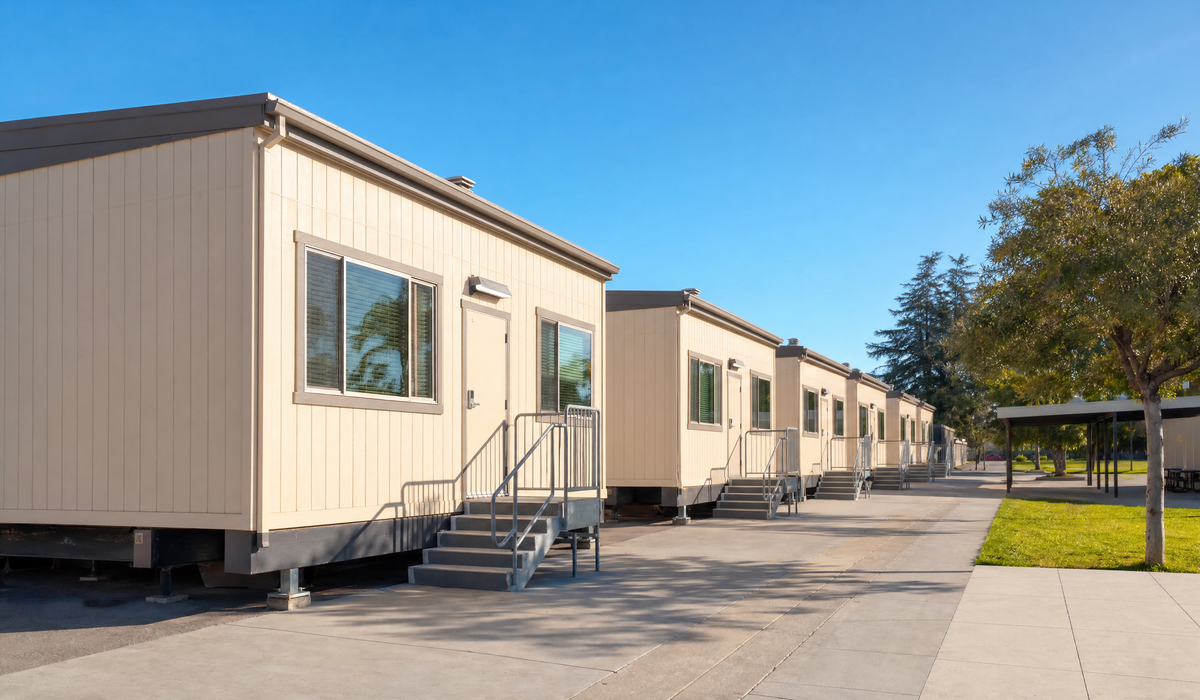
Row of beige portable buildings with steps along a paved path on a sunny day
By Seth Kozlik May 13, 2026
Are your portable classrooms properly integrated into the campus fire alarm system? Learn the DSA 25-foot rule, NFPA 72 testing requirements, and California Fire Code mandates for relocatable school buildings.
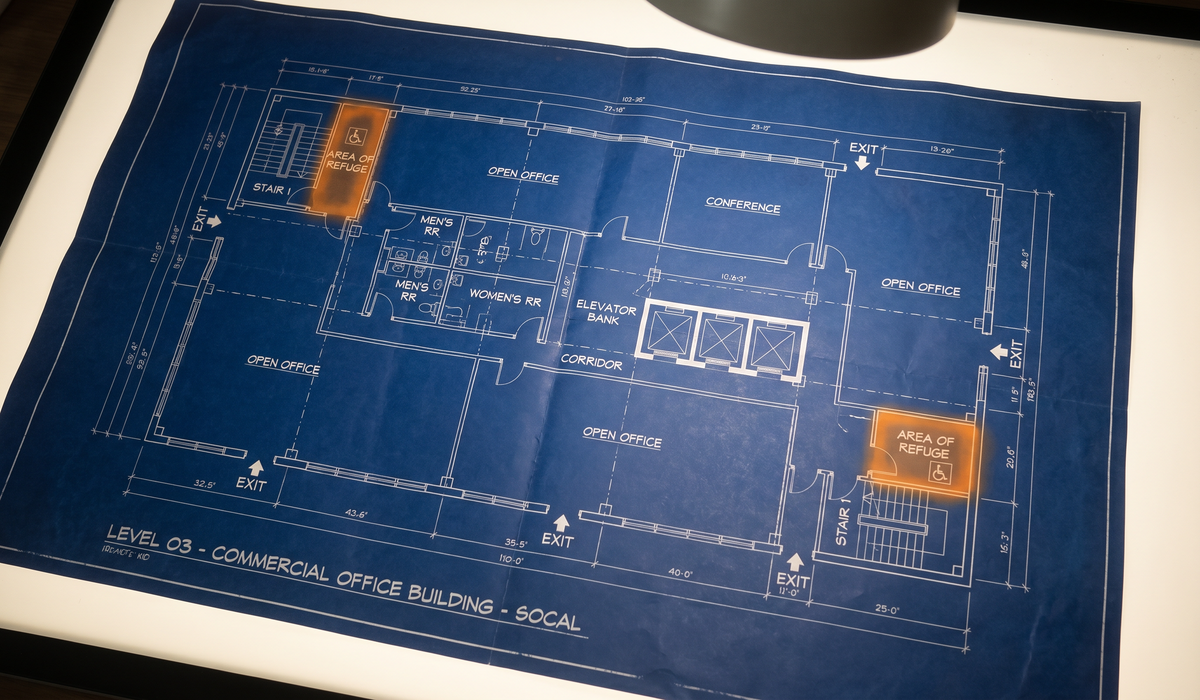
Blue architectural blueprint with white floor plan lines and two orange labels on a table
By Seth Kozlik May 8, 2026
Does your Southern California commercial building legally require an Area of Refuge? Learn which buildings need one under the California Building Code, what the law requires, and how to stay compliant.
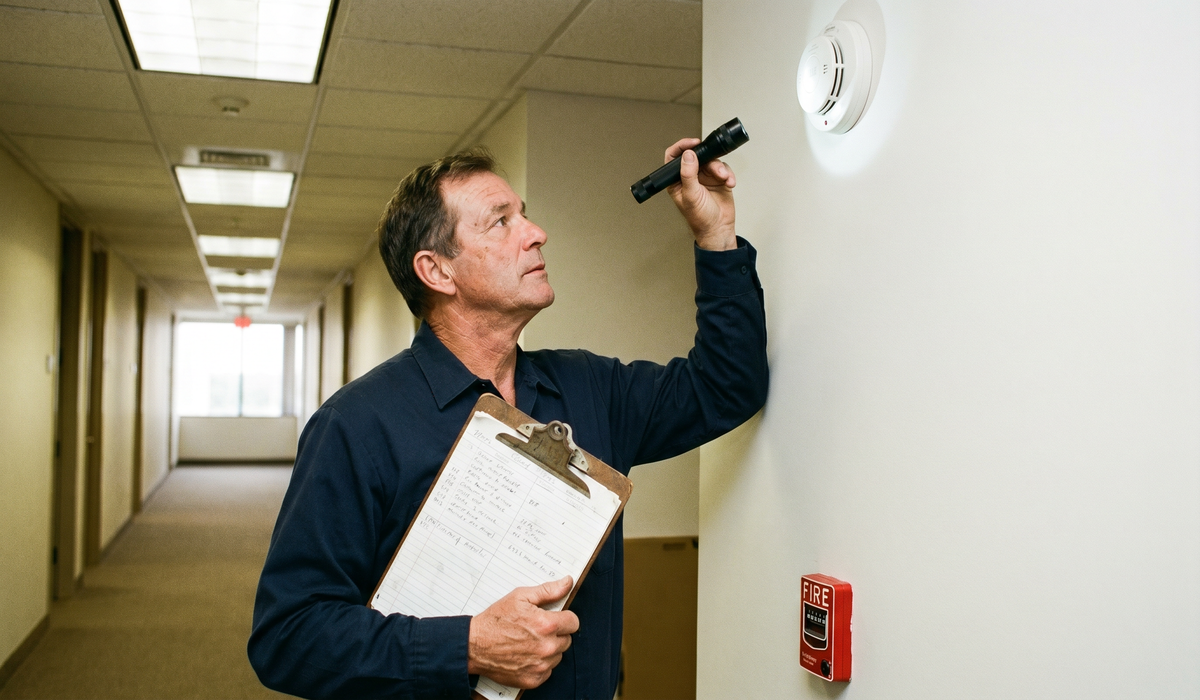
Maintenance worker inspecting a hallway wall with a flashlight and clipboard
By Seth Kozlik April 28, 2026
Not sure who is responsible for fire alarm compliance in your Southern California commercial property? Learn what California law says about property owners, managers, AHJs, and licensed contractors.
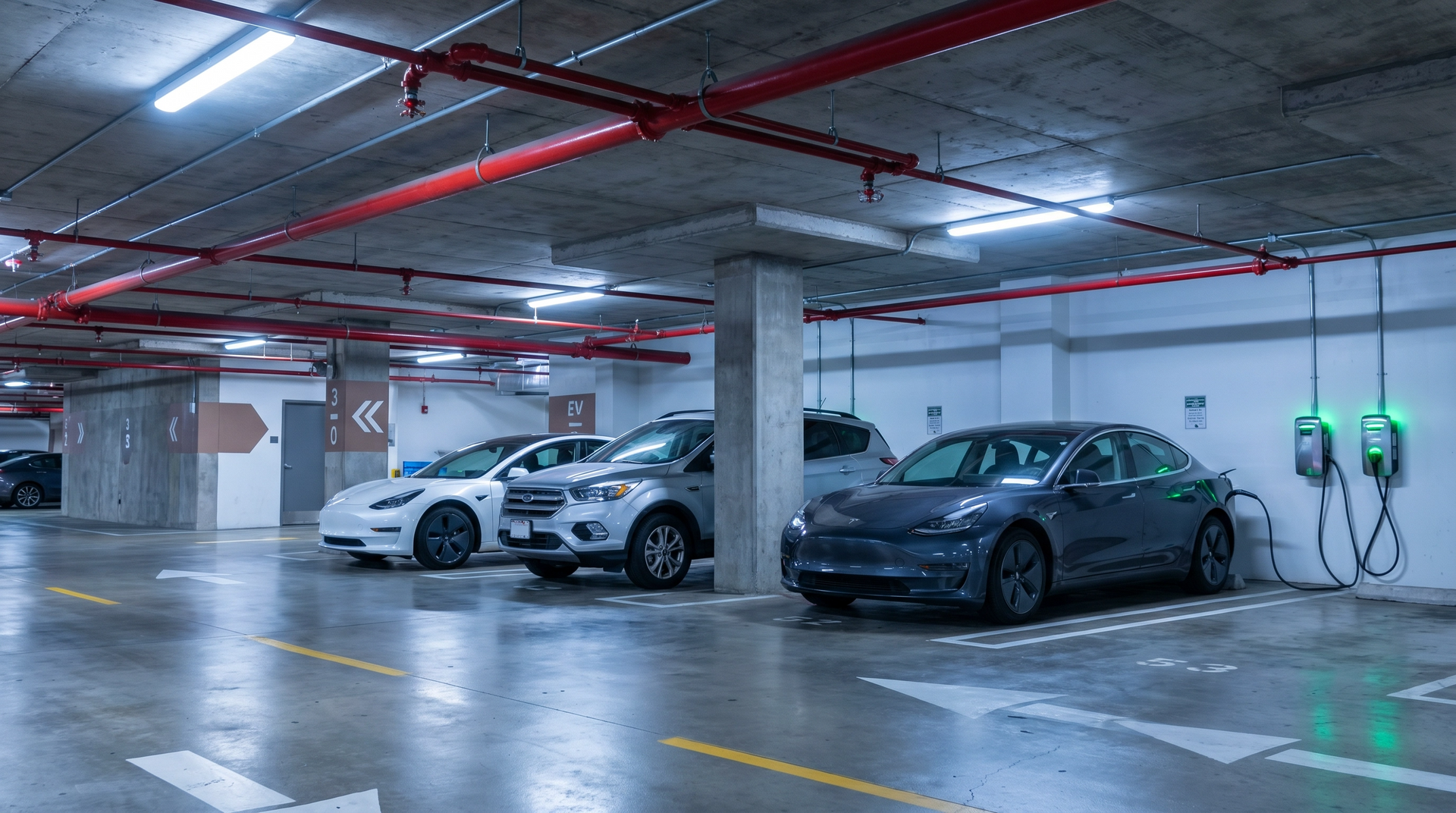
Underground parking garage with three parked cars and EV charging stations on the right.
By Seth Kozlik April 22, 2026
Adding EV chargers to your Southern California parking garage? Learn what NFPA 13 and NFPA 88A require for sprinkler systems — and how to stay compliant.
A long, perspective view of a warehouse aisle with pallets stacked high on metal shelving under bright overhead lights.
By Seth Kozlik April 15, 2026
Managing a cold storage facility in Southern California is complex enough without the constant worry of fire code violations. If you are a property manager or compliance officer, understanding how your fire alarm system integrates with your specialized sprinklers is the key to passing your next inspection and keeping your facility safe. Imagine this scenario: It is 2:00 AM at your cold storage distribution center in the Inland Empire. A small electrical fire starts near a forklift charging station. In a standard warehouse, the heat would rise, a sprinkler head would pop, and water would extinguish the flames. But in a freezer environment, standard sprinklers cannot be used because the water inside the pipes would freeze solid, destroying the system and ruining your inventory. Instead, cold storage facilities rely on highly specialized, dry-pipe systems—specifically, double interlock pre-action systems. But here is the catch that catches many property managers off guard: these complex sprinkler systems are entirely dependent on your fire alarm system to function. If the fire alarm integration fails, the sprinklers will not activate. This guide breaks down the critical requirements of NFPA 72 (the National Fire Alarm and Signaling Code) as it applies to cold storage environments. We will explain how these systems work together, what California law requires, and how proactive compliance can actually simplify your facility management.
A person in uniform points to a gauge on red pipes while discussing equipment with a colleague holding a tablet.
By Seth Kozlik April 8, 2026
Everything Southern California property managers need to know about fire & life safety compliance — NFPA 72, NFPA 25, Title 19, California Fire Code, and multifamily requirements. Stay legal and protect your properties.
More Posts