Where and How Fire Door Inspections Are Required Across California: A Complete Property Owner's Guide
If you manage a commercial property in California, you are likely familiar with the annual testing requirements for fire alarms and sprinkler systems. However, there is another critical life safety component that often slips under the radar until an inspector issues a citation: fire doors.
According to the Fire Door Inspection Scheme, 76% of fire doors fail professional inspections. In California, where the California Fire Code adopts the National Fire Protection Association (NFPA) 80 standard in full, annual fire door inspections are legally mandatory for most commercial and institutional buildings. A failed inspection can result in fines ranging from $500 to $5,000 per violation, potential occupancy restrictions, and significant liability exposure.
This guide breaks down exactly where fire door inspections are required across California, how the requirements differ by property type, and what you need to do to ensure your building remains compliant and safe.
The Legal Framework: NFPA 80 and the California Fire Code
The foundation of fire door compliance in California is NFPA 80, the Standard for Fire Doors and Other Opening Protectives. This standard dictates how fire doors must be installed, maintained, and inspected. The California Fire Code adopts NFPA 80, making its provisions legally binding statewide.
While the California State Fire Marshal (SFM) oversees statewide enforcement, the actual day-to-day enforcement is handled by the local Authority Having Jurisdiction (AHJ). Depending on your location, this could be the Orange County Fire Authority (OCFA), the Los Angeles Fire Department (LAFD), or your local city fire marshal.
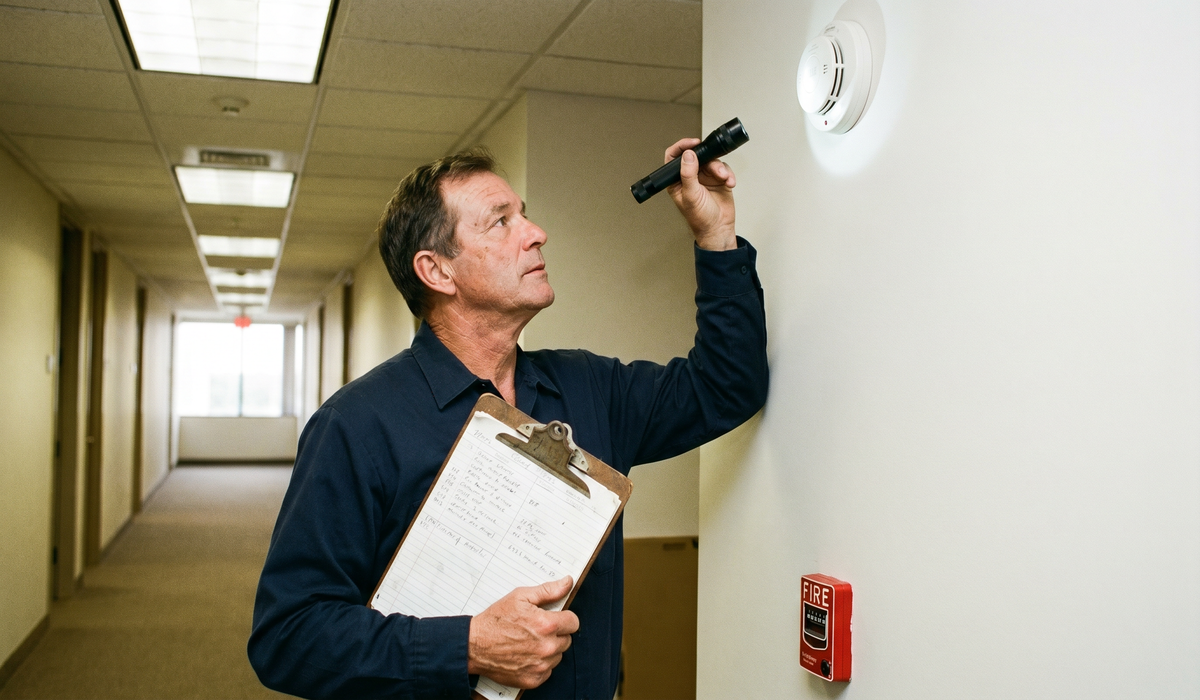
NFPA 80 Section 5.2.4 mandates that all fire door assemblies be inspected annually by a "qualified person." This inspection is not a simple visual check; it requires a comprehensive 13-point evaluation covering every component of the door assembly, from the hinges and closers to the labels and clearances. For a detailed breakdown of what inspectors look for, review our comprehensive NFPA 80 Fire Door Checklist: 13 Critical Points.
Fire Door Requirements by Property Type
The requirement for annual inspections applies statewide, but the specific doors that must be inspected and the required fire ratings vary significantly depending on the building's occupancy classification. The table below summarizes the requirements for the most common property types in California.
| Property Type | Occupancy Class | s Door Location | Minimum Fire Rating | Enforced By |
|---|---|---|---|---|
| Multifamily (Apartments/Condos) | R-2 | Unit-to-corridor | 20 Min | Local AHJ / OCFA / LAFD |
| Multifamily (Apartments/Condos) | R-2 | Stairwell (3 stories or fewer) | 60 Min | Local AHJ / OCFA / LAFD |
| Multifamily (Apartments/Condos) | R-2 | Stairwell (more than 3 stories) | 90 Min | Local AHJ / OCFA / LAFD |
| Hotel / Motel | R-1 | Guestroom-to-corridor | 20 min | Local AHJ |
| Hotel / Motel | R-1 | Stairwell | 60–90 min | Local AHJ |
| Healthcare (Hospital/Clinic) | I-2 | Smoke barrier corridor | 20 min | CDPH + Local AHJ |
| Healthcare (Hospital/Clinic) | I-2 | Fire barrier | 45-90 min | CDPH + Local AHJ |
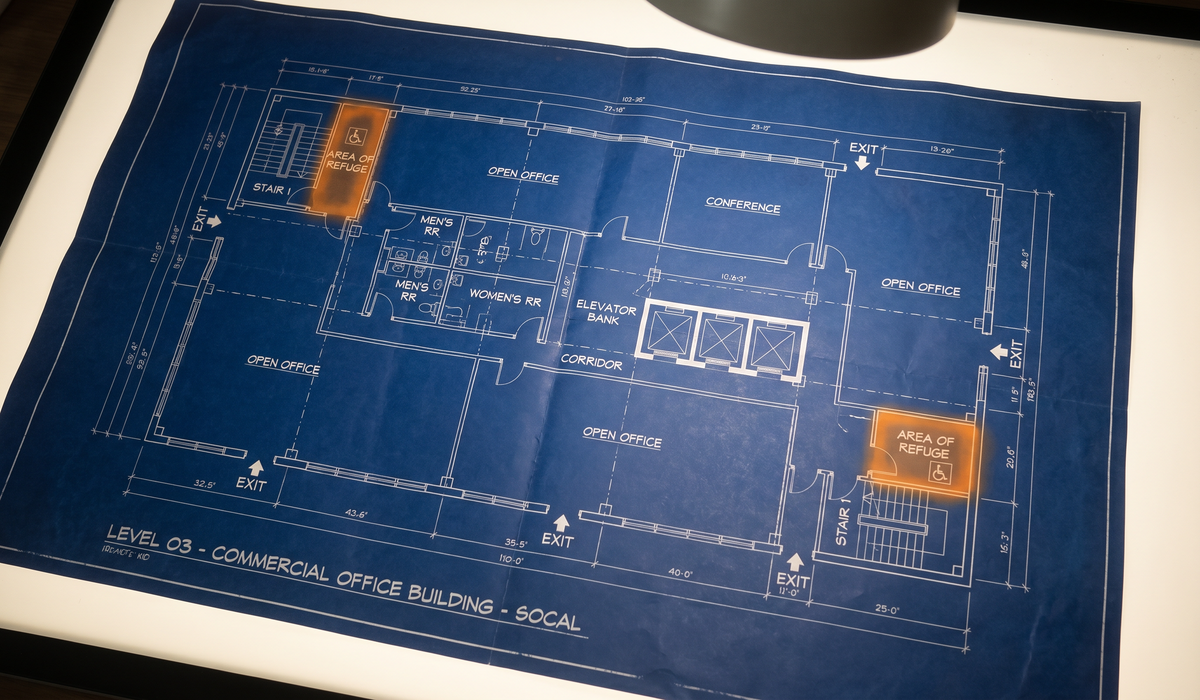
| Commercial Office | B | Stairwell / exit enclosure | 45–90 min | Local fire marshal |
| Retail / Shopping Center | M | Stairwell / occupancy separation | 45–90 min | Local fire marshal |
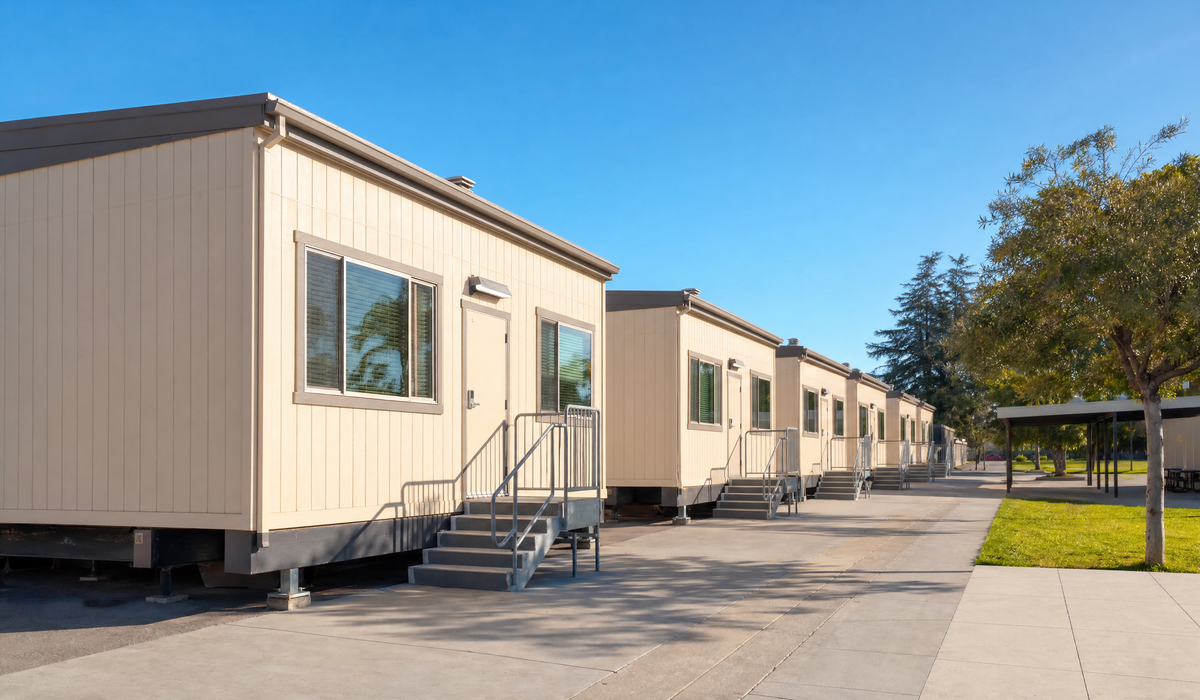
| School / Educational | E | Corridor | 20–45 min | DSA + Local AHJ |
| School / Educational | E | Stairwell | 60-90 min | DSA + Local AHJ |
| Warehouse / Industrial | S / F | Occupancy separation | 60–180 min | Local fire marshal |
| Warehouse / Industrial (High Hazard) | H | High-hazard area separation | 180 min (3 hr) | Local fire marshal |
| Parking Structure | S-2 | Separation from occupied building | 90 min | Local fire marshal |
A few important notes on this table. First, the multifamily sector (R-1 and R-2 occupancies) is one of the most commonly overlooked categories — property managers often assume fire door rules only apply to hospitals or high-rises. Second, healthcare facilities face the most stringent requirements because patients may be incapable of self-evacuation, requiring a "defend-in-place" strategy that depends entirely on fire-rated compartmentalization. Third, California public school construction is overseen by the Division of the State Architect (DSA), which strictly enforces NFPA 80 compliance independently of local AHJs.
The 13-Point Inspection Process
When a qualified inspector evaluates a fire door, they are verifying that the door will perform as designed during a fire. A fire door is a complete assembly — including the door, frame, hinges, closer, latching hardware, and seals. If any single component fails, the entire assembly loses its fire-resistance rating.
We have already published a detailed breakdown of exactly what inspectors check at every step. For the complete walkthrough, read our guide: NFPA 80 Fire Door Checklist: 13 Critical Points.
Following the inspection, the property owner must receive a detailed written report documenting the condition of each door. Any door that fails must be repaired or replaced immediately.
How Fire Testing Solutions Can Help
Navigating the complexities of California's fire door regulations requires specialized knowledge and experience. Fire Testing Solutions provides comprehensive fire and life safety services throughout Southern California, ensuring your property remains compliant and your occupants remain safe.
Our NICET-certified inspectors bring decades of combined experience and a deep understanding of local AHJ requirements. We offer:
- Complete NFPA 80 13-point inspections for all door types across all occupancy classifications.
- Detailed inspection reports with photographic documentation to satisfy fire marshals and insurance carriers.
- Clear identification of deficiencies and prioritized repair recommendations.
- Coordination with approved repair contractors to resolve issues quickly.
Beyond fire doors, we provide a full suite of life safety services, including Fire Alarm Testing, Alarm Monitoring, Repair, and Installation.
Frequently Asked Questions
Are fire door inspections required every year in California?
Yes. The California Fire Code adopts NFPA 80, which mandates that all fire door assemblies be inspected at least annually by a qualified person.
Who is responsible for fire door maintenance in a condo building?
The Homeowners Association (HOA) or property management company is responsible for maintaining and inspecting all fire doors located in common areas, such as stairwells, corridors, and mechanical rooms.
Can my in-house maintenance team perform the annual fire door inspection?
NFPA 80 requires the inspection to be performed by a "qualified person" with specific knowledge and training regarding fire door assemblies. While highly trained in-house staff can sometimes qualify, most property managers utilize certified third-party professionals to ensure compliance and limit liability.
What happens if a fire door is propped open?
Propping open a fire door with a wedge or unapproved hold-open device is a severe code violation. Fire doors must be self-closing to prevent the spread of smoke and fire. If a door needs to remain open for operational reasons, it must be equipped with an approved magnetic hold-open device tied to the building's fire alarm system.
Conclusion
Fire doors are a critical line of defense in any commercial building, designed to compartmentalize fire and smoke and protect egress routes. Whether you manage a sprawling apartment complex, a busy healthcare facility, or a commercial office building, annual NFPA 80 fire door inspections are a legal requirement across California.
Understanding the specific requirements for your property type and partnering with a qualified inspection service is the most effective way to avoid citations, reduce liability, and ensure the safety of your occupants.
Don't wait for a fire marshal's notice to discover your fire doors are non-compliant. Contact Fire Testing Solutions today to schedule your comprehensive fire door inspection.
- Phone: 866-757-8378
- Email: service@firetestingsolutions.com
- Address: 700 W. First St, Suite 10, Tustin, CA 92780